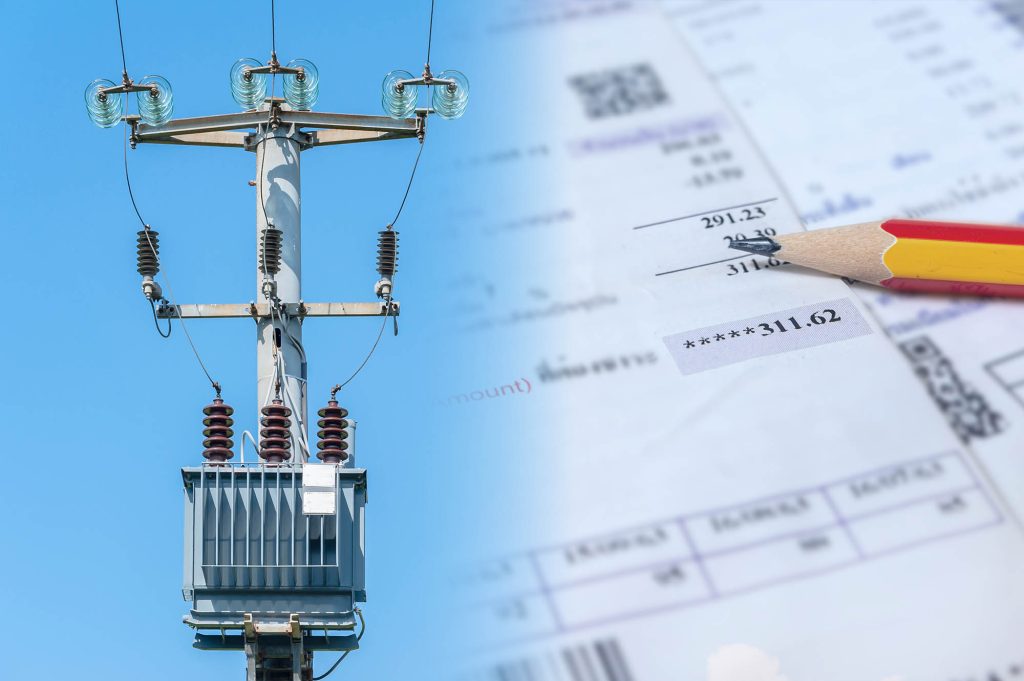
ASHEBORO N.C. (ACME NEWS) — A ruling from the North Carolina Court of Appeals earlier this month found that while Duke Energy collected millions of dollars from customers illegally, the company does not have to pay that money back.
In a pair of unpublished opinions released on Feb 18th by Judge John Arrowood (Dem), the court reversed the Utilities Commission decisions regarding 2024 fuel charges that Duke Energy Progress and Duke Energy Carolinas charged to customers, but also ruled thanks to a new law passed by the North Carolina General Assembly, customers will get no refunds.
Regulated Monopoly and How Duke Makes Money
In North Carolina, most residents do not get to choose their electric company. In much of the state, that provider is one of Duke Energy’s subsidiaries Duke Progress Energy and Duke Energy Carolinas.
Duke operates as what’s called a regulated monopoly. That means under NC law, the state gives the company the exclusive rights in large portions of the state to sell electricity free from competitors. In exchange, Duke cannot set its own rates. Major rate increases and large spending projects must be approved by the North Carolina Utilities Commission, a state agency that oversees electric, gas, and water utilities.
Duke earns profits on the infrastructure it builds — power plants, transmission lines, substations, and other equipment that keep electricity flowing. But the fuel used to generate electricity — such as coal and natural gas — works differently.
Fuel prices go up and down based on global markets. Duke does not earn profit on those fuel costs. Instead, the company is allowed to pass those costs directly to customers through a separate line item on power bills, often called a “fuel rider.”
Each year, regulators review what Duke actually spent on fuel compared to what customers were charged. If Duke collected too much, customers receive a credit. If it collected too little, customers pay the difference.
That annual adjustment process is where this dispute began.
What Led to the Court Case
For more than 30 years, state law limited how far back Duke could go when correcting fuel charges. The law allowed the company to recover fuel costs from a specific 12-month period — no further.
In 2024, Duke Energy Carolinas told the utility commission they had not fully recovered about $8 million in fuel costs from 2022. Duke asked permission to add those older costs into a fuel adjustment charged to customers. The Utilities Commission approved that request.
But the state’s consumer watchdog — known as the Public Staff — challenged that decision, arguing the law clearly limited adjustments to a single one-year period.
The dispute eventually reached the North Carolina Court of Appeals where earlier this month, a unanimous three-judge panel agreed with the public staff.
Writing for the court, Judge John Arrowood (Dem) said the “plain language” of the law only allowed Duke to recover fuel costs from that one defined 12-month period. Reaching back to collect additional 2022 costs was not allowed under the law at the time.
In short: the court ruled Duke charged customers in a way that violated the statute. However, the court stopped short of ordering refunds.
Why Customers Won’t Get Their Money Back
After the North Carolina Utilities Commission approved Duke Energy Carolinas’ 2024 fuel rider — which included $8 million in unrecovered 2022 costs — the Public Staff challenged the decision. In October 2024, they filed an appeal with the North Carolina Court of Appeals, arguing that the Commission had violated the law’s one-year limit on recovering past fuel costs.
While that case was still pending, the legislature acted. In June 2025, Session Law 2025‑78 was passed, removing the one-year limit and allowing utilities, like Duke, to recover older fuel costs.
Because of this change, the court ruled that ordering a refund would provide “no meaningful relief.” Any money returned to customers could simply be collected again by Duke under the new law, making a refund effectively pointless.
The bill was sponsored by Senator Danny Earl Britt, Jr. (Rep) who received more than $22,000 in campaign contributions from Duke through 2024 and Senator Warren Daniel (Rep) and Senator Timothy D. Moffitt (Rep) who both received $2,000 over the same period.
What It Means
The ruling sends two clear messages. First, the court found Duke did not follow the law as it existed at the time. Second, because lawmakers later changed the law, the outcome for customers remains the same: no refunds.
The news comes at around the same time that Duke Energy is reporting nearly $5 billion in profit for 2025, up almost 12% from the previous year, all while the energy monopoly is requesting a 15% rate increase from the utility commission over the next 2 years, resulting in $20–$30 more on monthly bills by 2028.
###