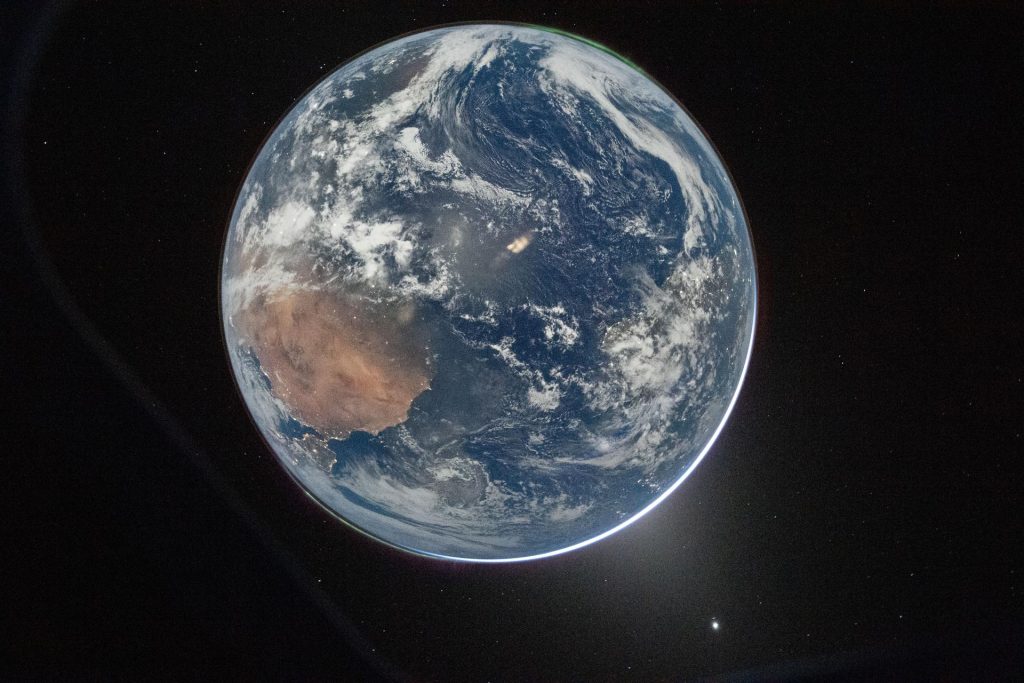
ASHEBORO N.C. (ACME NEWS) — Four astronauts aboard NASA’s Orion spacecraft fired their thrusters briefly Friday to sharpen their path to the moon, capping the third day of a mission that has already carried humans farther from Earth than any crew in more than half a century.
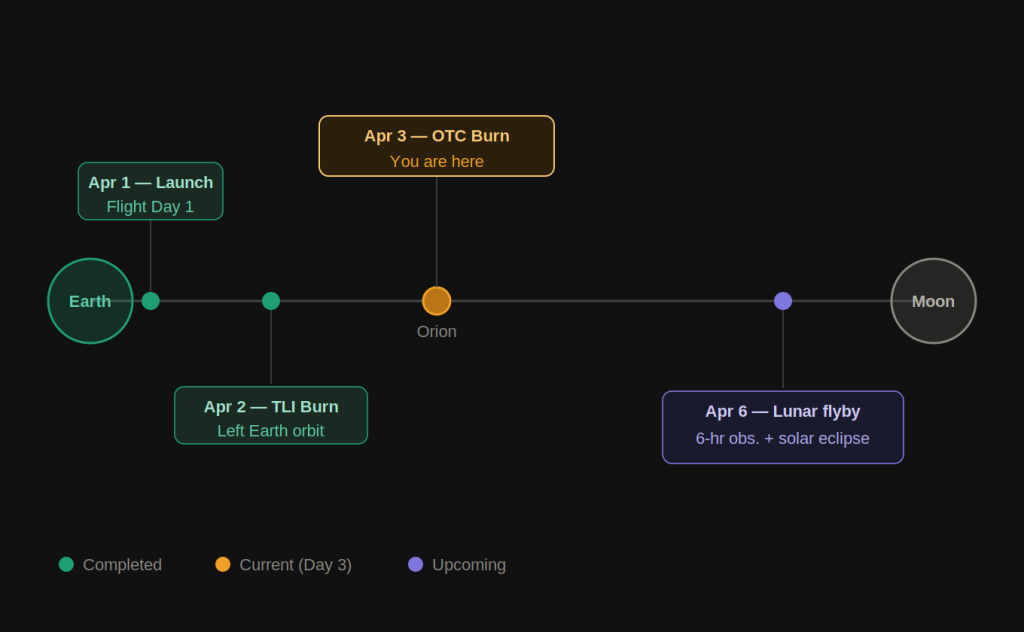
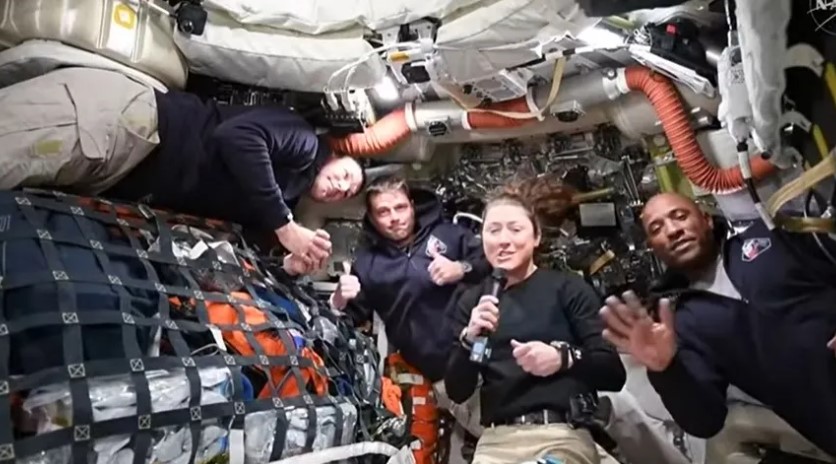
Commander Reid Wiseman, pilot Victor Glover, mission specialists Christina Koch and Jeremy Hansen of the Canadian Space Agency executed an eight-second engine burn Friday evening that adjusted Orion’s velocity by 0.7 feet per second. The maneuver, known as an outbound trajectory correction burn, is designed to place the spacecraft on an exact approach for a lunar flyby planned for Monday.
The crew woke Friday afternoon to “In a Daydream” by the Freddy Jones Band, played by flight controllers at Johnson Space Center in Houston. At that point, Orion was roughly 99,900 miles from Earth and about 161,750 miles from the moon.
The course correction followed the mission’s defining moment: a five-minute, 50-second main engine burn late Thursday that pushed Orion out of Earth orbit entirely. With that burn, Wiseman, Glover, Koch and Hansen became the first people to leave Earth’s orbit since the crew of Apollo 17 in December 1972 — a distinction that went largely unremarked upon in real time but that mission managers noted with evident pride.
“We sent humans around the moon for the last time in 1972,” said one flight director during the post-burn briefing. Now, more than 50 years later, a crew is making the journey again.
Monday’s flyby
The mission’s centerpiece arrives Monday, when Orion is expected to loop around the moon during a six-hour observation window. The geometry of the pass will give the crew a sunlit view of roughly 20% of the lunar far side — the hemisphere that permanently faces away from Earth and has never been seen directly by human eyes without the aid of photography.
Among the features expected to be visible: the Orientale impact basin, Pierazzo crater and Ohm crater. NASA’s lunar science team has spent the past two days building a targeting plan to maximize what the crew can document during the window.
The flyby will also produce a roughly hour-long solar eclipse as the sun passes behind the moon from Orion’s vantage point. The crew will use the darkened conditions to watch for brief flashes caused by meteoroids striking the lunar surface, search for dust lofting above the moon’s edge, and observe the solar corona — the sun’s faint outer atmosphere — as it emerges from behind the lunar limb.
The crew spent part of Friday rehearsing for the observation period, stowing equipment, mounting cameras and practicing movement in the tight confines of the Orion capsule, which NASA describes as roughly the size of two minivans. They configured handheld cameras with 80-400-millimeter and 14-24-millimeter lenses for use during the flyby.
Health checks and communications tests
The crew also ran through a CPR and choking-response demonstration Friday, part of an ongoing evaluation of emergency medical procedures that can be performed aboard the spacecraft in the event of a medical emergency far from Earth.
Koch tested Orion’s emergency communications system Friday using NASA’s Deep Space Network, confirming that the link remained reliable as the spacecraft moved farther from Earth. The Orion Artemis II Optical Communications System also successfully connected with two ground stations in the United States, transmitting high-definition video and mission data back to Houston.
Engineers earlier traced a brief communication dropout from shortly after launch to a ground configuration issue involving the Tracking and Data Relay Satellite system. The problem was resolved quickly and had no effect on mission operations.
View the latest imagery from the Artemis II mission on our Artemis II Multimedia Resource Page. Please follow @NASAArtemis on X, Facebook, and Instagram for real-time updates. Live mission coverage is available on NASA’s YouTube channel.
###