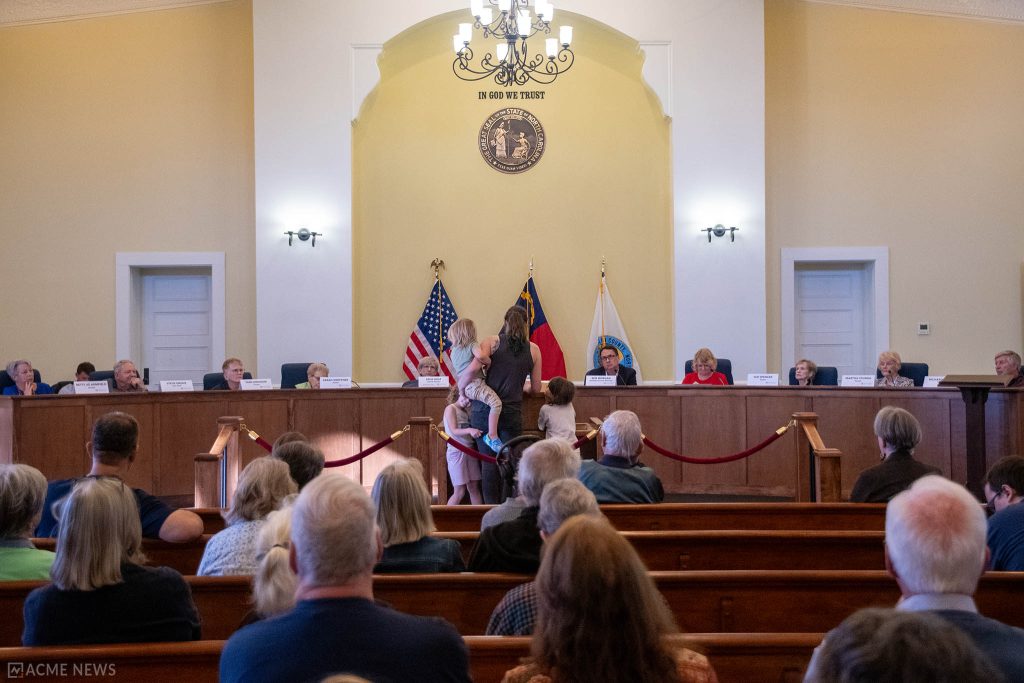
ASHEBORO, N.C. (ACME NEWS)— The Randolph County Board of Commissioners voted Monday night to adopt a new library ordinance and bylaws, resetting the governance of the county’s public library system following months of strife.
Tuesday night’s vote comes three months after the commissioners took the unprecedented step in December 2025 of dissolving the previous Board of Trustees. That dismissal was sparked by a controversy over the children’s picture book ‘Call Me Max’, which features a transgender protagonist.
While the previous board was found to have followed its policies by keeping the book in the children’s section, several commissioners argued the trustees no longer represented the ‘values’ of the community.
“Not a Lot of Changes”
During Monday’s meeting, County Attorney Ben Morgan characterized the new bylaws and ordinance as a modernization effort rather than a radical shift. He noted that the goal was to bring the library board in line with the procedures of other county boards, such as the Board of Health.
“We’ve simply tried to clarify some of the vagueness within the document itself,” Morgan told the board. “There aren’t a lot of other significant changes.”
The new bylaws replace the 2018 revisions to the original 1993 bylaws, making changes to the board’s makeup. The most notable change shortens trustee terms from six years to three and sets a new cap of three consecutive terms before a trustee must step away. The new rules also formalize the number of trustees who represent each community assigning specific seats to each of the system’s seven library branches, rather than the limit of no more than two members from the same census township in the old bylaws.
A Randolph County Commissioner now fills one of the board’s non-voting seats, replacing a liaison previously appointed by the Asheboro City Council. Meetings must begin at 6 p.m. or later to make attendance easier for working residents, and trustees who miss three consecutive meetings — rather than three in a calendar year — now risk losing their seat.
Challenges to library materials follow largely the same process as before, with one addition. Complaints now go first to a three-person staff panel made up of the library director, assistant director and the relevant department head before reaching the full board. As before, patrons who are unsatisfied with that decision can still appeal to the trustees, who retain final authority. Under a separate policy adopted in 2023, if a book or other material survives a challenge, no new challenge can be filed against it for five years.
Public Weighs In
Citizens who weighed in during the public comment portion of the meeting reflected a community deeply divided over the board’s dissolution and the future of library governance.
Supporters of the commissioners’ actions included three local pastors, who praised the board for its ‘tenacity’ and ‘resolve to protect children.’
Joe Burgess, a former teacher, was more vocal about her opposition; “These things aren’t appropriate,” Burgess said. “I don’t care how we phrase it, it’s wrong. And I think everyone knows it’s wrong. It’s against nature”. She went on to cite biblical references, express gratitude that “the other side” was not pushing a “woke agenda” on her and thanked President Trump.
Another speaker incorrectly stated that “Call Me Max” was in elementary school libraries across the county. Randolph County Schools denied the claim Tuesday, saying the district “does not have the book ‘Call Me Max’ in any of our school libraries.”
Supporters of the library and several residents pushed back, expressing sharp disagreement with the removal of the previous trustees.
“When we restrict access to books about certain groups, we are casting those kids and their families out of our community. We are isolating them, judging them, and telling them that they don’t belong — that they are somehow less than the rest of us. That’s wrong,” said Susie Scott.
Charlie White, who questioned the legality of the board’s decision to dismiss members under North Carolina law, said the issue has transcended literature.
“This may have begun as a disagreement over a book, but it is now about the Constitution itself and the limits on power,” White said. “Removing public officials mid-term without statutory cause and procedural safeguards is not a policy disagreement; it is a due process violation. When officials are removed for properly exercising authority that you delegated to them, it raises profound constitutional concerns.”
The Path Forward
While the new ordinance and bylaws take effect immediately, they do so over an empty board —as the county has yet to name any new trustees.
Chairman Darrell Frye noted that the Board of Commissioners had received numerous inquiries regarding potential appointees but would not be naming any new members at the meeting. “I’ve had a lot of people calling, and I think we’ve all had people calling. We’re not naming anyone tonight, but we’ll be looking for board members from each of your areas,” said Chairman Frye.
Commissioners said they’d like to see a more formal, transparent application process to fill the vacancies, which would be available on the county website. Until those appointments are made, the library system remains without a citizen oversight board.
###