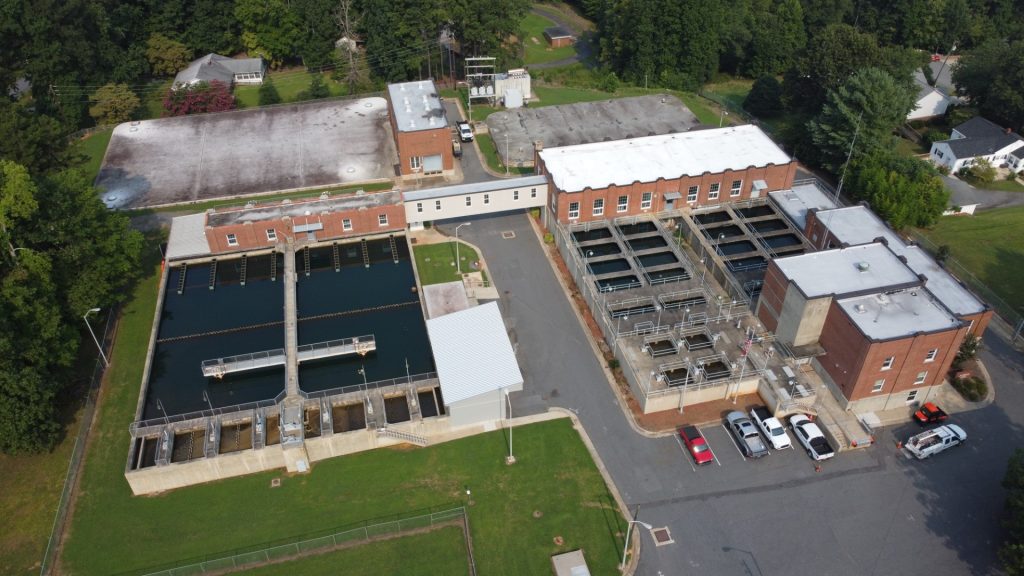
ASHEBORO, N.C. (ACME NEWS) — The City of Asheboro has spent more than $734,000 in public money on outside legal counsel to fight state and federal regulators over 1,4-dioxane discharges from its wastewater treatment plant — and those costs are expected to continue to climb.
Records produced by the City of Asheboro show the Raleigh law firm Cranfill Sumner LLP was paid $695,469 across 37 invoices between early 2024 and early 2026. All of those payments were drawn from the city’s Water Resources fund, meaning the tab is being picked up by Asheboro’s water utility ratepayers, not the city’s general fund.
When combined with payments to two other law firms — $19,327 to Brooks, Pierce, McLendon and $19,738 to Davis Hartman Wright LLP — the total legal bill tracked by city records since May 2020 reaches $734,535.
The city entered into an agreement with Cranfill Sumner LLP on Feb. 12, 2024. That agreement confirms the firm was engaged to provide “representation, legal assistance and general advice” before judicial, administrative, legislative and regulatory bodies concerning the city’s wastewater treatment works, its NPDES permit and “various state and federal authorities’ attempted regulation of ‘forever chemicals,’ including among others, 1,4-dioxane.”
The firm’s rates run $795 per hour for lead partner Patrick M. Mincey, $750 per hour for other partners, $650 per hour for associates and $295 per hour for paralegals.
The retainer also anticipated from the outset that this would be a prolonged, multi-year fight — and built in a provision allowing the firm to raise its rates by up to 8% annually, beginning 24 months after signing. That window opened in February 2026. The city confirmed this week that the rates have not increased yet.
The agreement also reveals that Asheboro is not footing the bill alone. Cranfill Sumner has been representing the city under a joint arrangement with Greensboro and Reidsville — two other municipalities that discharge 1,4-dioxane-containing wastewater into the same waterway. Joint representation costs are divided based on each city’s wastewater treatment capacity: Greensboro pays 79.4% (56.0 million gallons per day), Asheboro pays 12.8% (9.0 MGD) and Reidsville pays 7.8% (5.5 MGD).
Where the money to pay those legal fees is drawn from matters. North Carolina law requires municipal utility funds to be self-sustaining — revenues must cover operations, maintenance and debt service, and cities that fail to meet that standard risk losing local control of their systems to the state. Asheboro has acknowledged as much, saying the city “is obligated to manage the system independently from general fund operations” and that rates must keep the fund “balanced and solvent.”
Yet the Water Resources fund has posted an operating loss every year since at least 2022. Revenues grew from $12.87 million that year to $17.15 million in 2025 — but expenses have outpaced them each year, producing losses of $1.57 million in 2022, $93,000 in 2023, $315,000 in 2024 and $839,000 in 2025.
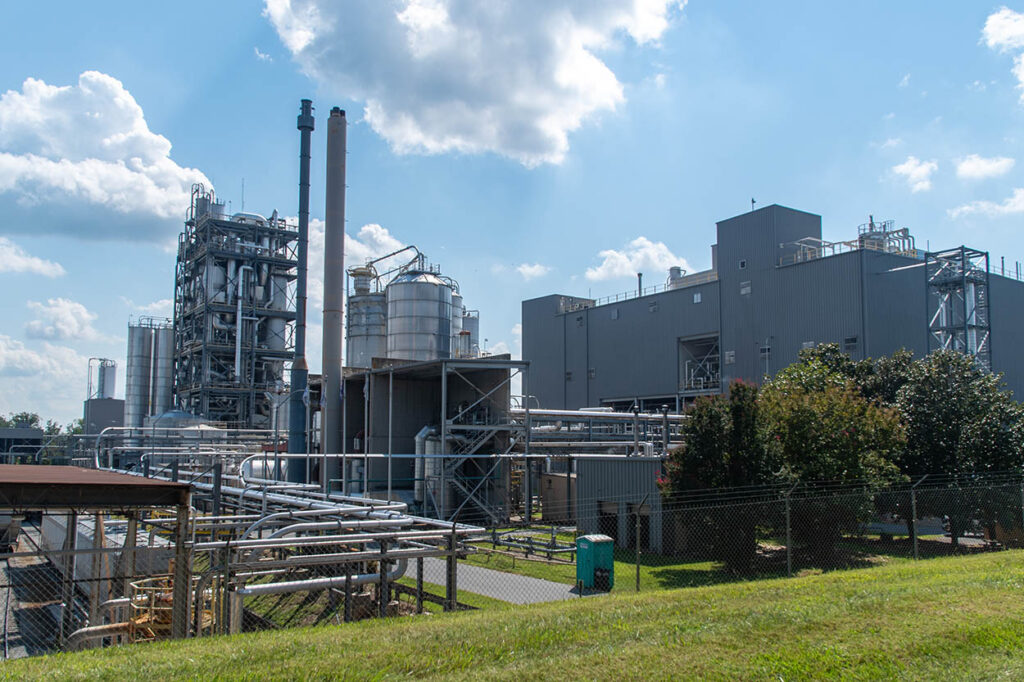
The legal bills stem from a years-long effort by Asheboro to resist limits on how much 1,4-dioxane it can discharge into Hasketts Creek, which feeds into the Cape Fear River basin and ultimately into drinking water supplies for roughly one million people downstream.
The U.S. Environmental Protection Agency classifies 1,4-dioxane as a likely human carcinogen and sets 0.35 parts per billion as the maximum safe level in drinking water. The chemical passes through standard wastewater treatment essentially unchanged.
In 2023, the N.C. Department of Environmental Quality added enforceable dioxane limits to Asheboro’s wastewater permit. Asheboro, along with Greensboro and Reidsville, pushed back, taking the case to the Office of Administrative Hearings. In September 2025, Administrative Law Judge Donald Van Der Vaart sided with the cities, declaring the limits void and calling the agency’s actions “arbitrary and capricious.”
That victory was short-lived. On Feb. 5, 2026, Wake County Superior Court Judge Graham Shirley reversed Van Der Vaart’s ruling, finding that DEQ had acted within the law by prioritizing public safety. All three cities have since filed for a stay of enforcement while they appeal to the N.C. Court of Appeals.
Simultaneously, environmental groups — the Haw River Assembly and Cape Fear River Watch, represented by the Southern Environmental Law Center — filed a separate federal lawsuit against Asheboro over its dioxane discharges.
City Manager Donald Duncan said in September 2025 that the outcome of the litigation “will determine what, if any, effluent limits for 1,4-dioxane are lawful and enforceable.”
With appeals still pending at both the state and federal level, a final resolution may still be years away — with water and sewer customers in Asheboro continuing to foot the bill as the legal battle plays out.
###