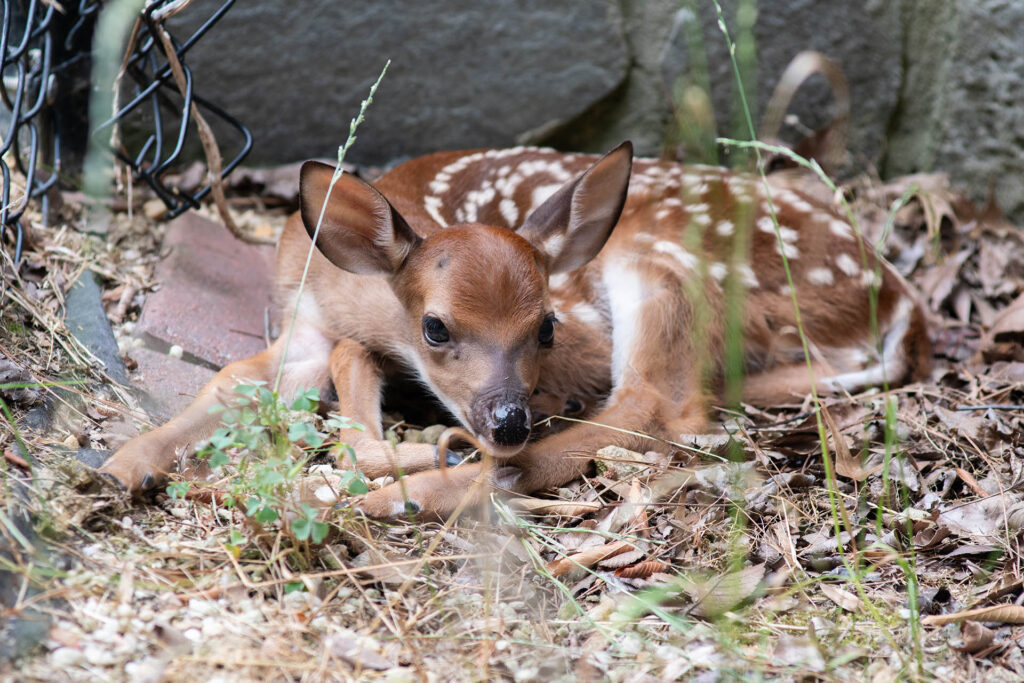
ASHEBORO N.C. (ACME NEWS) — During spring and summer in North Carolina wildlife officials want to get the message out that if you find a newborn deer fawn curled in the grass, leave it alone.
White-tailed deer are a “hider” species. Mother deer, known as does leave newborn fawns concealed in shrubs, tall grass or bushes for hours while they forage nearby, returning later to pick them up.
A fawn’s spotted coat and near-absence of scent work as camouflage. Predators that hunt by smell can pass within feet of a motionless fawn and miss it entirely. The helplessness doesn’t last long: the N.C. Wildlife Resources Commission says a fawn can outrun a human by the time it is 5 days old and escape most predators by 6 to 10 weeks.
Wildlife officials warn that removing a fawn is worse than leaving it. A fawn separated from its mother is more likely to die, not less — outside of trained rehabilitators, few people are equipped to keep one alive. Attempting to chase or catch a fawn carries its own risk: the animals are acutely sensitive to stress, which can trigger capture myopathy, a potentially fatal physiological condition.
North Carolina prohibits the rehabilitation of adult white-tailed deer entirely. Fawns may be placed in the care of a licensed rehabilitator, but fawns found within a designated Chronic Wasting Disease Surveillance Area cannot be rehabilitated or transported outside that zone. Keeping most wildlife without a permit is illegal under state law.
The commission’s wildlife helpline logs between 100 and 300 calls a month in most seasons, but that figure climbs past 700 monthly from March through July. Deer generate more calls than any other species — ahead of bears, birds, raccoons and foxes.
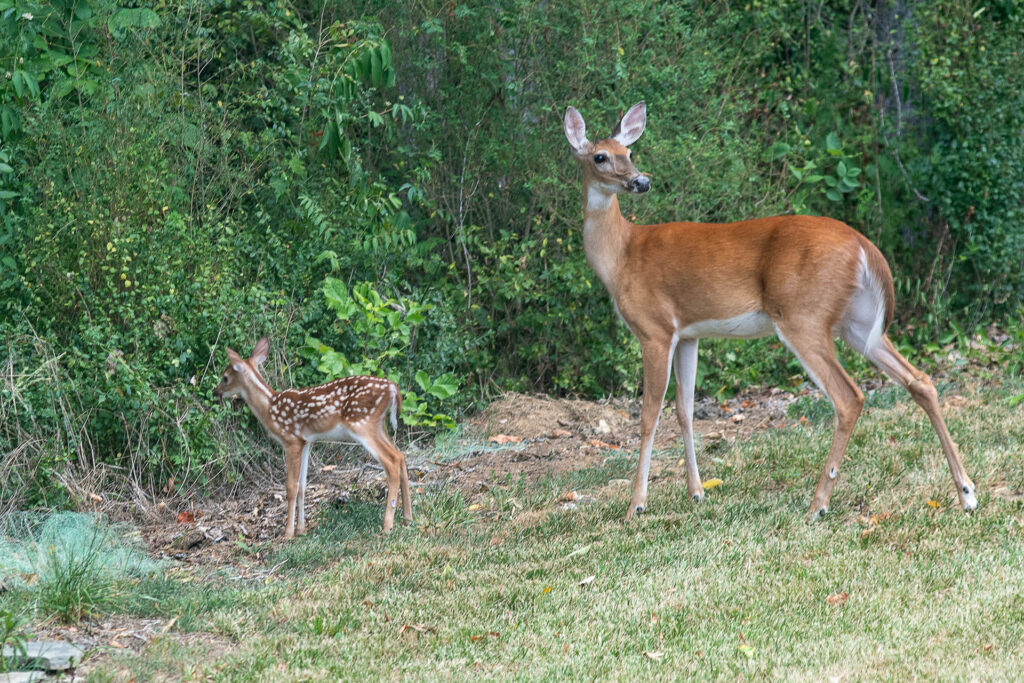
Officials advise keeping people, pets and children away from any fawn encountered in the wild. Do not touch, feed or attempt to move it. Mother deer rarely abandon offspring even after catching a whiff of human scent.
Leave the fawn where it is and check back the next day. The doe will typically return on her own. A fawn that has been genuinely orphaned will show clear signs: constant crying or distress calls, flies buzzing around it or the presence of fly eggs or maggots, diarrhea, inability to lift its head, or visible injury and bleeding. At that point, contact a licensed wildlife rehabilitator. Do not attempt to intervene without one.
Anyone who encounters wildlife that appears genuinely orphaned or injured can reach the N.C. Wildlife Helpline at 866-318-2401, Monday through Friday, 8 a.m. to 5 p.m., or email HWI@ncwildlife.gov. After hours, contact the Wildlife Enforcement Division at 800-662-7137. A rehabilitator locator is available at ncwildlife.org/injured-wildlife.
###