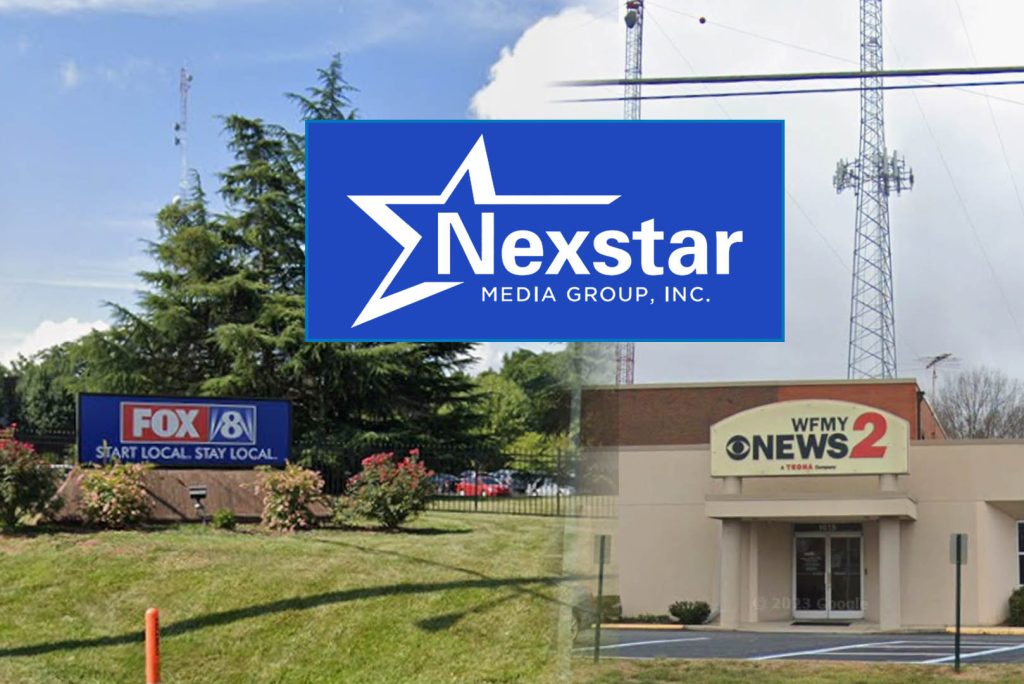
ASHEBORO N.C. (ACME NEWS) — For the first time in over 60 years, Fox 8 and News 2 have the same corporate owner. Whether they stay independent newsrooms may now be up to a federal court.
On March 19, Nexstar Media Group completed its $6.2 billion purchase of TEGNA Inc., instantly becoming the largest local television station owner in American history. For Triad viewers, the deal put Fox 8 and News 2 under the same corporate roof. Eight state attorneys general, including North Carolina’s Jeff Jackson, have already sued to block it. A federal judge later hit pause — but the case is still playing out in court.
What Happened
The merger between Nexstar Media Group and TEGNA Inc. cleared federal review in under four months — far faster than the six months to more than a year that similar deals have typically required. But it wasn’t just the speed of the deal that raised eyebrows; It was how things played out.
Federal law bars any station group from reaching more than 39 percent of U.S. television households. Post-merger, Nexstar’s reach is 54.5 percent by FCC math — nearly 40 percent above that cap. Despite that, the Chief of the FCC’s Media Bureau granted a waiver and approved the deal without a vote of the full five-member commission. The bureau argued the 39 percent cap is an agency rule, not a law, and that the FCC has authority to waive it.
Rep. Frank Pallone Jr. of New Jersey, the top Democrat on the House committee that oversees the FCC, wrote directly to Chairman Carr warning that waiving the cap would be unlawful and accusing him of political favoritism — saying the move was ‘obviously designed to allow a political ally, Nexstar, to complete’ the merger.
That letter came after President Trump publicly endorsed the merger on Truth Social in February, saying it would “knock out the Fake News.” FCC Chairman Brendan Carr responded publicly, saying “Let’s get it done.”
On the evening of March 18, eight state attorneys general — including North Carolina’s Jeff Jackson — filed federal antitrust lawsuits and asked Nexstar to hold off on closing while the court considered the case. Nexstar didn’t respond. The very next morning, the Department of Justice abruptly dropped its antitrust investigation, the FCC signed off on the deal, and Nexstar announced the merger was complete — all before the states could get a court hearing. Nexstar’s CEO publicly thanked FCC Chairman Carr by name. When the states followed up that morning, they were told it was too late.
The Legal Pushback
North Carolina Attorney General Jeff Jackson was one of eight state attorneys general who sued to block the merger. In a press release, he made it clear why North Carolina needed to join the legal battle.
“Nexstar wants to buy one of its biggest competitors, gain more control over local news stations and Sunday afternoon NFL broadcasts, and charge millions of North Carolina families more for television. That’s exactly why antitrust laws exist, and I’m going to court to stop it,”
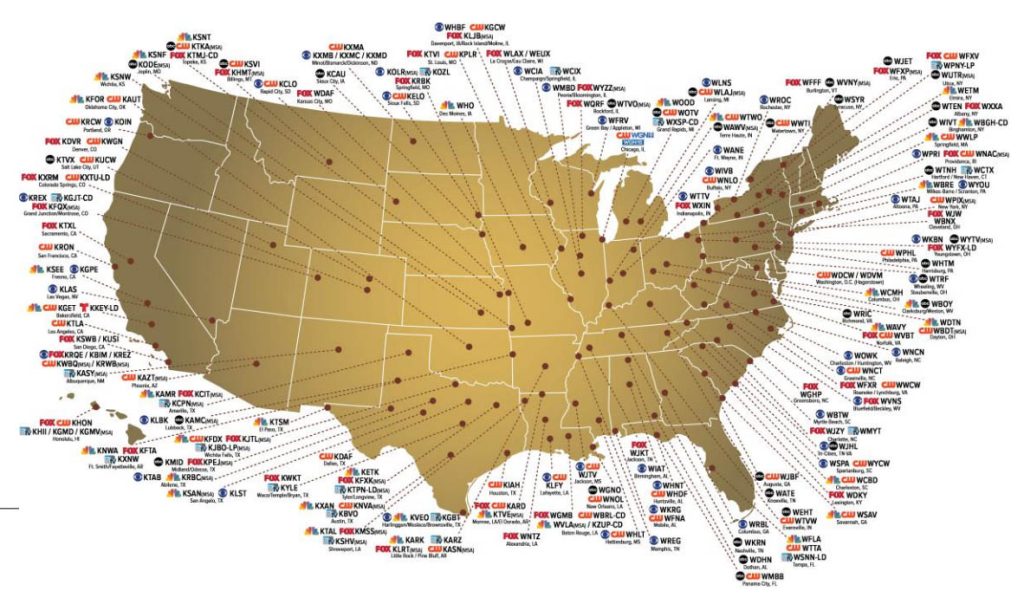
Jackson’s office identified North Carolina as among the most affected states in the country. More than two million TV households across Charlotte, the Triad, and northeastern North Carolina are in markets where Nexstar and TEGNA previously owned competing stations. The Charlotte and Greensboro markets alone account for nearly half of all TV households in the state.
Jackson called the sudden closing of the deal “an obvious end run around the court” and filed an emergency motion to put a hold on the merger the following day. A federal judge agreed — at least for now.
On March 27, Judge Troy Nunley in California granted a temporary restraining order, ruling the merger is “presumed likely to violate antitrust laws based on the combined firm market share alone.” Nexstar was ordered to keep TEGNA’s stations operating separately and began reversing branding changes it had already made at stations across the country.
The antitrust suits argue the merger eliminates competition in 31 markets where the two companies previously owned competing stations, giving Nexstar unfair leverage to raise fees on cable and satellite providers. Those costs, the lawsuits argue, get passed directly to consumers.
Nexstar and TEGNA pushed back in court, arguing some actions taken at closing are legally irreversible and that the restraining order creates a “governance vacuum.” An April 7 hearing lasted several hours but ended without a ruling. The judge said a written order would follow.
On April 10, Judge Nunley extended the freeze for another week — through April 17 — and loosened a few restrictions to let both companies handle routine business in the meantime. More significantly, his written order signaled that a longer-term halt is likely coming. A broadcast attorney following the case told Communications Daily the language the judge used “is unlikely to be followed with a ruling allowing them to merge.”
What It Could Mean for Triad Viewers
For viewers in this part of North Carolina, the concerns are twofold: higher cable bills and fewer independent local newsrooms. However, Nexstar disputes both.
The billing concern centers on leverage. When one company controls multiple major network affiliates in the same market, it can threaten to black out more than one major channel simultaneously during contract negotiations with cable and satellite providers — a threat no provider can easily ignore. The higher fees TV providers are forced to pay then get passed on to subscribers. Something Newsmax’s CEO pointed out in testimony before congress.
“We see this clearly with Nexstar, which owns an enormous number of ABC, CBS, and NBC stations. If cable operators want access to those local stations, they must pay Nexstar high retrans fees,” said Chris Ruddy, CEO of Newsmax Media, testifying before the U.S. Senate Committee on Commerce, Science, and Transportation. “If they refuse, Nexstar can—and does—pull its stations, leaving viewers in the dark.”
Nexstar already charges the highest average retransmission fees of any broadcaster in the country. Jackson’s office calculated that roughly 45 percent of Nexstar’s projected $300 million in merger savings would come from collecting higher fees from cable and satellite companies — about $135 million extracted from TV providers, and ultimately from viewers, every year.
In the Greensboro-High Point-Winston-Salem market, court filings say the combined company now controls 53 percent of local Big 4 broadcast revenue — more than 14 times the federal threshold courts use to flag a deal as anti-competitive.
Nexstar has pushed back on the billing concerns. As a condition of FCC approval, the company committed to freezing retransmission rates for existing cable and satellite contracts through November 30, 2026. The company also argues its stations are available free over the air, which it says disciplines any effort to raise prices. The FCC accepted those commitments as enforceable.
Nexstar also has a documented history of merging newsrooms after acquiring competing stations in the same market — a strategy its own investor presentations call the “Consolidation Playbook.” In Indianapolis, the local Fox and CBS affiliates, both Nexstar-owned, already share a news director, a website, and the same reporting team.
Nexstar’s chief financial officer has pointed to the 35 markets where it overlaps with TEGNA as the primary source of cost savings in the deal.
Nexstar began layoffs at stations including KTLA in Los Angeles in the weeks before the merger closed. A 2025 University of Delaware study found Nexstar airs more identical content across stations in the same market than any other major broadcaster — a practice researchers attributed to cost-cutting rather than editorial judgment.
Nexstar disputes this characterization. As another condition of FCC approval, the company committed to increasing local programming hours in acquired markets for a minimum of two years after closing, and plans to expand local news in nine specific markets. Nexstar has not made any specific announcements about plans for Fox 8 or News 2.Reporters Without Borders called the merger “a disaster for American journalism,” saying it would “exacerbate the local news crisis by further consolidating control of local news stations into the hands of a few national corporations.” Nexstar CEO Perry Sook has called the deal “essential to sustaining strong local journalism in the communities we serve.”
What Comes Next
The temporary restraining order runs through April 17. Judge Nunley is expected to issue a written ruling before then on whether to convert it into a longer preliminary injunction — which would freeze the merger indefinitely while the antitrust case plays out in court. Legal observers tracking the case say the judge’s recent language strongly suggests that injunction is coming.
A separate coalition including DirecTV and Newsmax has also challenged the FCC’s approval in federal appellate court in Washington, arguing the agency overstepped its authority in waiving the ownership cap. Some bipartisan members of Congress — including Senators Ted Cruz and Maria Cantwell — have also questioned whether a merger of this scale should have been approved without a vote of the full commission.
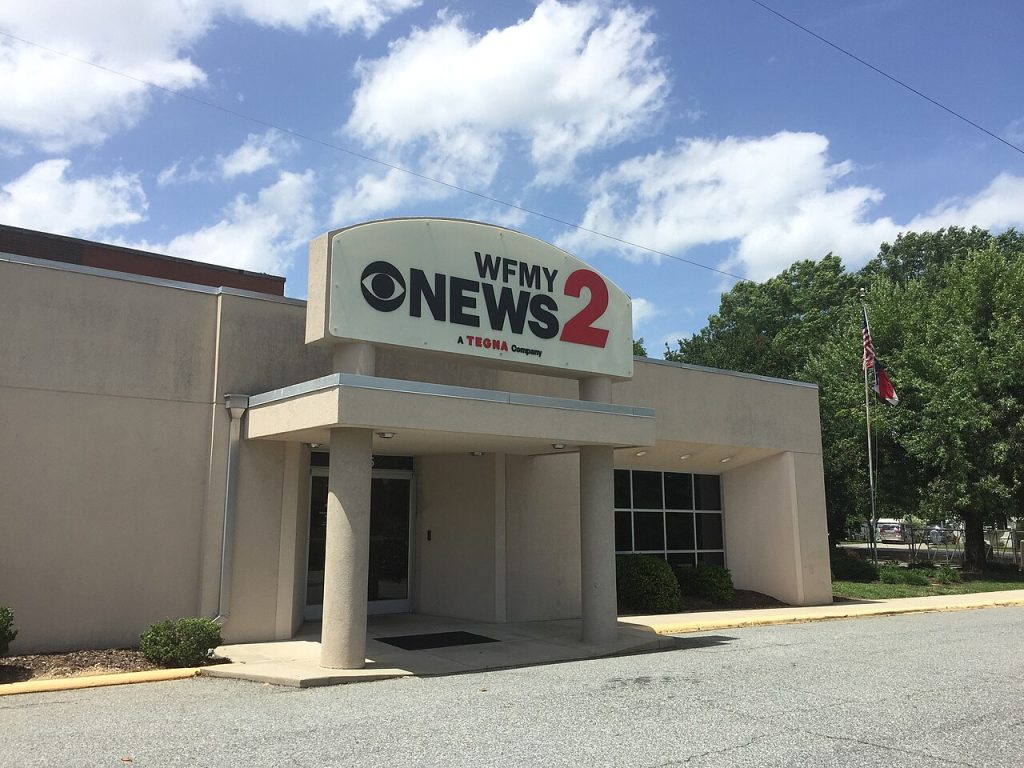
For now, Fox 8 and News 2 are operating as separate newsrooms. Both stations were contacted by Acme News late last week ahead of publication and given opportunity to comment on the merger, its potential impact on local news operations, and concerns raised in court. Neither station responded.
###