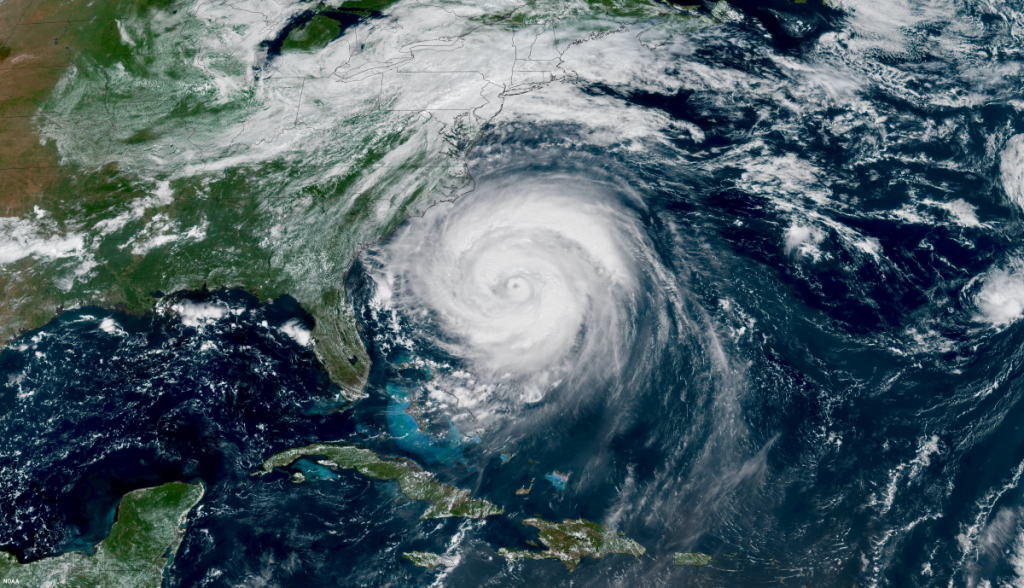
ASHEBORO N.C. (ACME NEWS) — Federal forecasters are predicting a quieter-than-average Atlantic hurricane season this year, but North Carolina emergency officials are warning residents not to let their guard down.
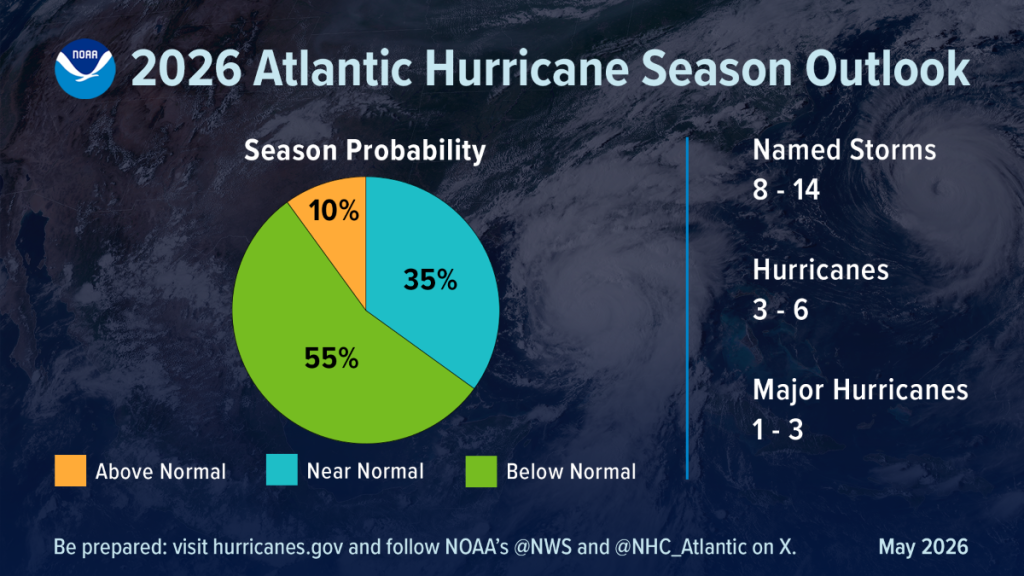
This week, officials at the National Oceanic and Atmospheric Association (NOAA) released their 2026 Atlantic hurricane season outlook, predicting a 55% chance of a below-normal season.
Forecasters are calling for 8 to 14 named storms with winds of 39 mph or higher, of which 3 to 6 are expected to become hurricanes. One to three of those could reach major hurricane status — Category 3 or higher — with sustained winds of at least 111 mph.
NOAA set 70% confidence in those ranges. An average Atlantic season produces 14 named storms, seven hurricanes and three major hurricanes.
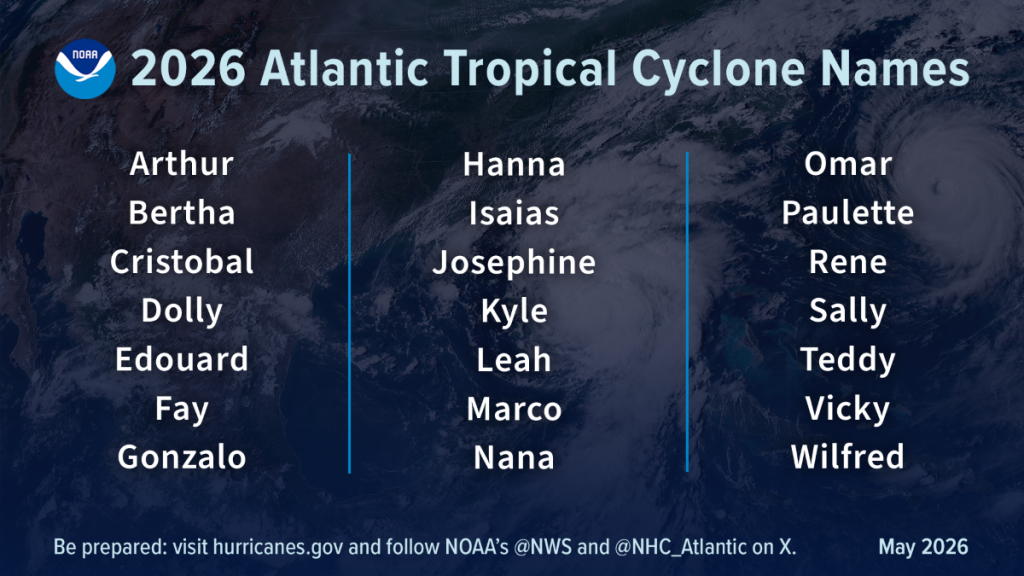
The below-normal forecast is driven primarily by the expected development of El Niño, a periodic warming of the Pacific Ocean that tends to suppress Atlantic hurricane activity. Forecasters say there is a 98% chance El Niño conditions will be in place during the season’s peak months of August, September and October. Working against that, Atlantic ocean temperatures remain above average — a condition that, on its own, would fuel a more active season.
If conditions unfold as expected, 2026 would be only the second below-normal season in the past decade. Since the current Atlantic high-activity era began in 1995, about 70% of seasons have been above-normal, with below-normal seasons occurring just 14% of the time.
“Although El Niño’s impact in the Atlantic Basin can often suppress hurricane development, there is still uncertainty in how each season will unfold,” NOAA’s National Weather Service Director Ken Graham said. “It only takes one storm to make for a very bad season.”
North Carolinians need no reminder of that reality. Hurricane Helene struck in late September 2024, killing 108 people in the state — the deadliest storm in North Carolina’s modern history — and causing more than $59.6 billion in damage. The storm’s most catastrophic impacts were felt not on the coast but deep in the western mountains, where historic flooding and landslides leveled communities across a dozen counties. Helene never made landfall in North Carolina; it came ashore as a Category 4 in Florida before tracking inland and unleashing devastation hundreds of miles from the sea.
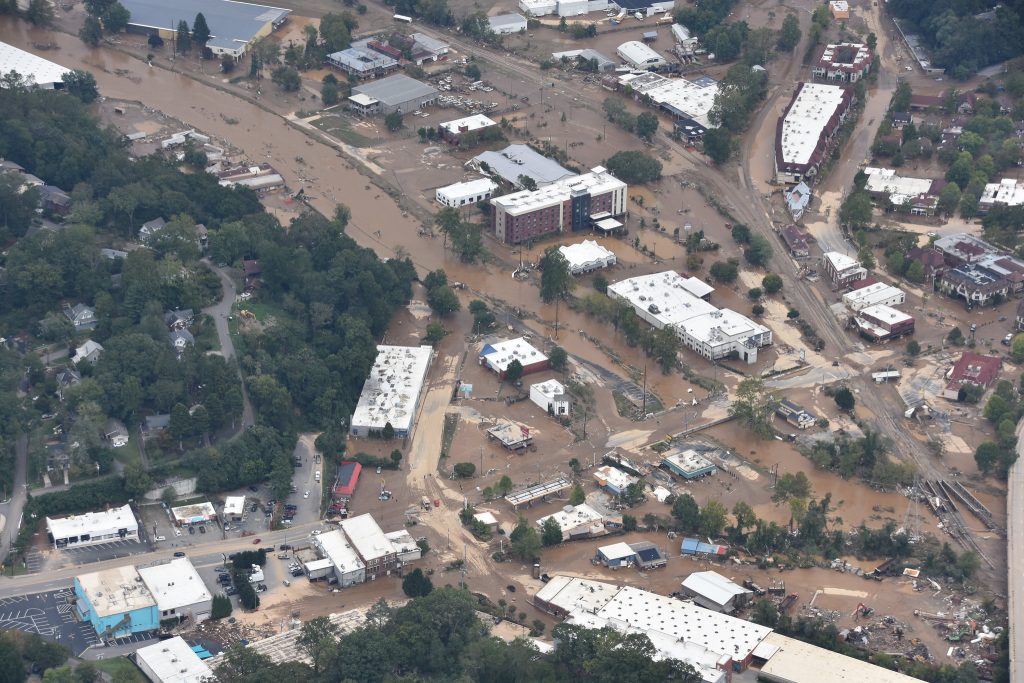
That pattern is not unusual for the state. Some of North Carolina’s worst storms — including Hugo in 1989, Floyd in 1999 and Matthew in 2016 — made landfall elsewhere but caused catastrophic damage across the Piedmont and mountains. Since 1851, 36 storms have made direct landfall in North Carolina at hurricane strength, striking the state on average every two years.
NOAA cautioned that even a quiet season carries significant risk, pointing to 2015 as an example — a below-normal year in which Hurricane Joaquin still caused catastrophic flooding across parts of the Carolinas.
Among new tools available this season, NOAA’s National Hurricane Center will roll out an improved forecast cone graphic that will include tropical storm and hurricane watches and warnings for inland areas — a change that could give Piedmont and mountain residents earlier visual alerts about approaching storms.
The outlook does not predict where or when storms may strike land. Landfall is determined by short-term weather patterns not predictable weeks or months in advance.
North Carolina emergency officials say now — before any storm is on the horizon — is the time to prepare, particularly for residents of the Piedmont and mountains. Inland communities often have less experience with hurricane impacts and less warning time when a storm’s rain bands stall over mountain terrain or river basins overflow. Residents near creeks, rivers and low-lying roads should monitor rainfall forecasts closely as any storm approaches, even one expected to make landfall hundreds of miles away.
Officials recommend preparing before a storm threatens rather than scrambling when one is on the way. That means stocking basic supplies — water, non-perishable food and flashlights — and taking simple steps like learning how to shut off water and gas lines at home. Small preparations made now can prove critical when emergency services are stretched thin after a major storm.
Flooding — not wind — is the leading killer in tropical storms, accounting for more than half of all direct storm deaths over the past decade, according to NOAA’s National Hurricane Center. Driving into floodwaters is one of the most common fatal mistakes: the National Weather Service reported that vehicle-related deaths accounted for more than half of all flood fatalities in 2023. Just one foot of moving water can carry a car off the road. Officials urge residents to heed the state’s standing warning: Turn Around, Don’t Drown.
The Atlantic hurricane season runs June 1 through Nov. 30. NOAA will update its seasonal outlook in early August, ahead of the historical peak of the season. More preparedness information is available at ReadyNC.gov and weather.gov/safety .
###