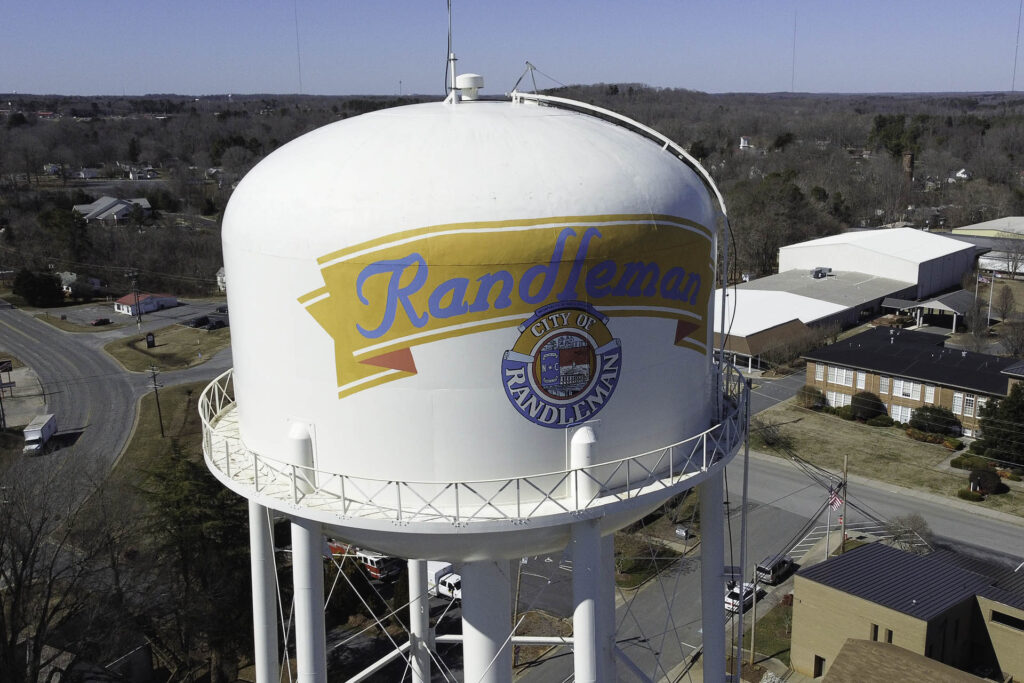
ASHEBORO, N.C. (ACME NEWS) — As North Carolina’s drought deepens into its second summer, nearly half the state is in extreme drought with rainfall deficits exceeding 16.5 inches. For Randolph County, water managers will be keeping an eye on reservoir levels and forecasts in the coming months.
Randolph County depends on more than six separate systems that supply 19,087 connections. Asheboro draws from two reservoirs, Ramseur from another, Liberty from groundwater wells, Franklinville from Ramseur, and Randleman from PTRWA who manages Randleman Lake.
For residents not on well water, knowing where your water comes from can help you understand if and how the drought could affect you.
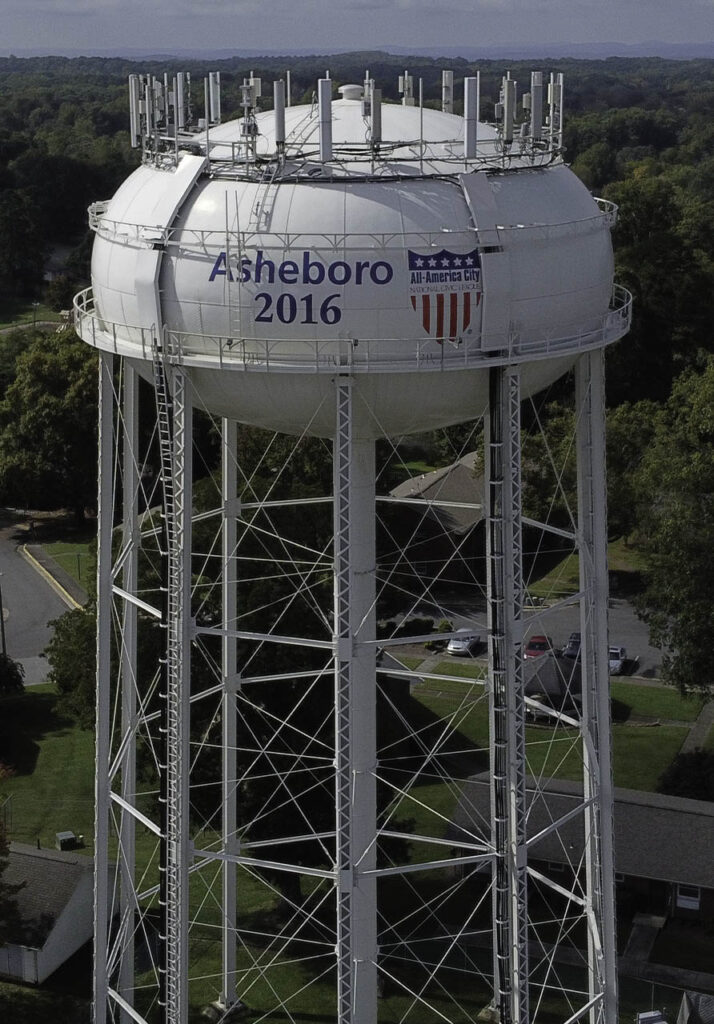
Asheboro
Asheboro serves about 13,000 connections and accounts for the majority of the county’s local retail water usage, drawing from two reservoirs, Lakes Reese and Lucas. Its water shortage response plan uses a four-level system based on usable storage and days of available supply.
Level 1 is voluntary and activates when usable storage drops below 60 percent or available supply falls below 190 days. At this level, residents are encouraged—but not required—to conserve water by methods like watering lawns only between 7 p.m. and 7 a.m. and keeping showers short. No penalties apply at this stage.
Level 2 is the first mandatory level and begins when usable storage drops below 50 percent or supply falls below 150 days. Outdoor washing is prohibited, and violations incur penalties. Level 3, the second mandatory level, triggers below 40 percent storage or 125 days of supply, banning non-essential water uses and imposing drought surcharges. At Level 4, with storage below 35 percent or fewer than 100 days of supply, the city deems the water supply substantially diminished and a potential threat to public health.
As of early July, Asheboro’s combined reservoirs are at approximately 90 percent usable storage—305 days of available supply. Lake Lucas remains full. Lake Reese has dropped 26.5 inches and is losing about 3 inches per week. Michael Rhoney, Asheboro’s water resources director, said the city is monitoring conditions closely but remains well above any restriction threshold.
Randleman
The City of Randleman buys its water from the Piedmont Triad Regional Water Authority (PTRWA), which operates Randleman Lake and serves as a wholesale supplier to the cities of Trinity, Archdale, Wallburg, and others outside Randolph County. While Randleman has a secondary connection to Asheboro, its water shortage plan is based on Randleman Lake levels and follows PTRWA’s triggers.
Randleman Lake’s full pool elevation is 682 feet. Restrictions trigger at four specific levels. Phase 1 (Advisory) activates at 677 feet—5 feet below full—when partners are advised to conserve, though measures remain voluntary.
Phase 2 (Warning) begins at 672 feet (10 feet below full), triggering mandatory 10 percent reductions in usage and forcing PTRWA to reduce dam discharges. Phase 3 (Emergency) occurs at 662 feet, 20 feet below full pool, when additional mandatory conservation measures are implemented. Phase 4 (Shutdown), the most severe stage, begins at 645 feet (37 feet below full), when water service becomes severely restricted or may be discontinued.
Randleman Lake water levels vs. PTRWA thresholds
The lake dropped to its lowest point during the recent drought—679 feet—in February 2026, but has since slightly recovered. As of early July, Randleman Lake stood at 679 feet, approximately 2 feet below full pool. That puts it a little over 2 feet above the advisory threshold and nearly 8 feet above any mandatory water restrictions.
Gregory Flory, PTRWA’s executive director, noted that historically the reservoir does not recover until smaller reservoirs serving High Point fill. He expressed optimism that an expected shift toward El Niño weather patterns will prevent the lake from reaching any conservation trigger level.
Ramseur
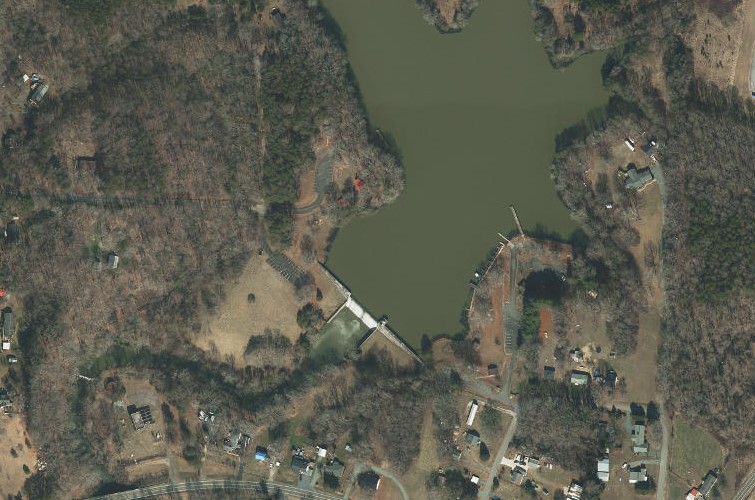
Ramseur pulls from Sandy Creek Reservoir and has a shortage plan with five escalating stages triggered by usable storage percentages.
Stage 1 (Voluntary) activates when usable storage drops below 91 percent or falls 1 foot below full, requesting a 5 percent usage reduction with no penalties. Stages 2 and 3 (Mandatory I & II) trigger at 83 percent and 75 percent storage, respectively, restricting outdoor irrigation to specific windows between 8 p.m. and 10 p.m., with progressively fewer days allowed. Penalties climb from $50 to $200, and drought surcharges begin at 1.5 times the normal rate.
Stages 4 and 5 (Emergency and Rationing) occur below 67 percent and 10 percent storage, banning all non-essential water use, raising surcharges to 2x to 5x normal rates, and making service discontinuation possible.
Specific water levels for Sandy Creek Reservoir were not available at the time of publication. However, based on the levels at other county reservoirs, it’s likely they are well above any thresholds for restrictions.
Franklinville
Franklinville currently purchases all of its water from Ramseur under a contract expiring in 2037. Franklinville’s five-stage plan mirrors Ramseur’s exactly. Any drought that triggers restrictions in Ramseur automatically cascades to Franklinville, which currently has no secondary source.
This year, a new interconnection to Asheboro is being installed to provide a backup, reducing the vulnerability of its single-source dependency.
Liberty
Liberty operates nine groundwater wells serving 0.27 million gallons daily and currently uses only 48 percent of its available groundwater supply.
Its shortage triggers are performance-based rather than level-based: a 20 percent yield reduction in high-volume wells, automatic low-water cutoff activation, extended well recovery times, or unlocated water loss can all trigger restrictions.
When restrictions do activate, Liberty prioritizes water use into three classes. Class 1 covers essential needs—firefighting, public health, and safety. Class 2 includes domestic uses (kitchen, bathroom, laundry), commercial services, and institutions like schools and restaurants. Class 3 covers non-essential outdoor uses like lawn irrigation and ornamental fountains.
For residential customers, the allocation is 40 gallons per person per day. Penalties for exceeding allocations start at $7 per 1,000 gallons over the first 2,000 gallons, then escalate to $15 per 1,000 gallons thereafter, with reconnection fees ranging from $50 to $300 for repeat violations.
However, Liberty has substantial groundwater reserves and no immediate shortage risk.
Why This Matters Now
The North Carolina Drought Update released July 9, 2026, showed that extreme drought (D3) expanded significantly across the state. The Greensboro area has experienced a 16.5-inch rainfall deficit since August 2025; Raleigh’s deficit exceeds 19 inches. The National Weather Service predicts continued summer-like precipitation patterns—spotty, insufficient relief that will prolong drought stress through the season.
No water system in Randolph County is currently under restrictions, and sources still have a healthy buffer before advisories activate. However, the rain deficit grows each week, shrinking those margins. The next two months—when heat stress peaks and rainfall is least predictable—will determine whether the county slides into restrictions.
###