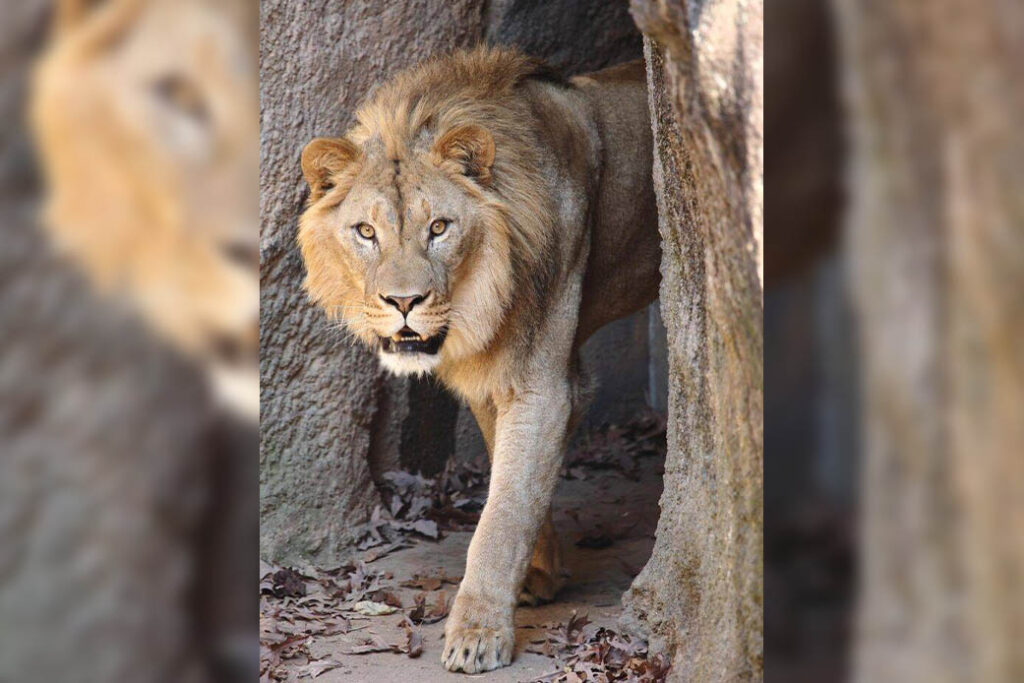
ASHEBORO, N.C. (ACME NEWS) — The North Carolina Zoo has introduced Haji, a 3-year-old male lion weighing 400 pounds, as a companion for the Zoo’s female lion Mekita, 13. The pairing was recommended by the Association of Zoos and Aquariums Lions Species Survival Plan.
Haji arrived from the Audubon Zoo in New Orleans in December and has since undergone introductions with Mekita in their indoor quarters. Now on a rotating schedule, guests can begin seeing Haji on habitat as he becomes more comfortable with his new surroundings.
Visitors can identify Haji by his distinctive growing mane, which features a mohawk-style appearance and will continue to darken as he ages.
Mekita’s previous mate, Reilly, died in August 2022 at age 23. The veteran lion lived at the Zoo for 21 years and spent most of that time with Mekita. Lions are social animals that live in family groups called prides, making Haji’s arrival significant for Mekita’s well-being.
Jennifer Ireland, the Zoo’s curator of mammals, said the introduction process requires patience and careful management.
“We’re excited our guests now get to see Haji more often,” Ireland said. “We’re giving Haji more time to explore his new habitat to help establish his territory. Right now, they can see and smell each other.”
Ireland said Haji and Mekita will eventually roam the habitat together as they become more comfortable with each other. The Zoo has observed positive signs during introductions, including vocalizations between the two lions.
Lion prides in the wild typically comprise a dominant male, multiple females and their offspring. Lions are native to African savannahs and grasslands and can reach speeds up to 50 mph over short distances.
A lion’s average lifespan in the wild is 10 to 15 years. Male lions under human care have a median life expectancy of 17 years. Males can weigh up to 570 pounds, while females weigh up to 277 pounds.
African lions are listed as “Vulnerable” by the International Union for Conservation of Nature, with populations continuing to decline due to habitat loss and poaching. An estimated 23,000 to 39,000 lions remain in the wild.
The North Carolina Zoo supports conservation efforts across Africa, including implementing SMART-based monitoring systems that assist with anti-poaching efforts to protect lions in critical habitats.
###