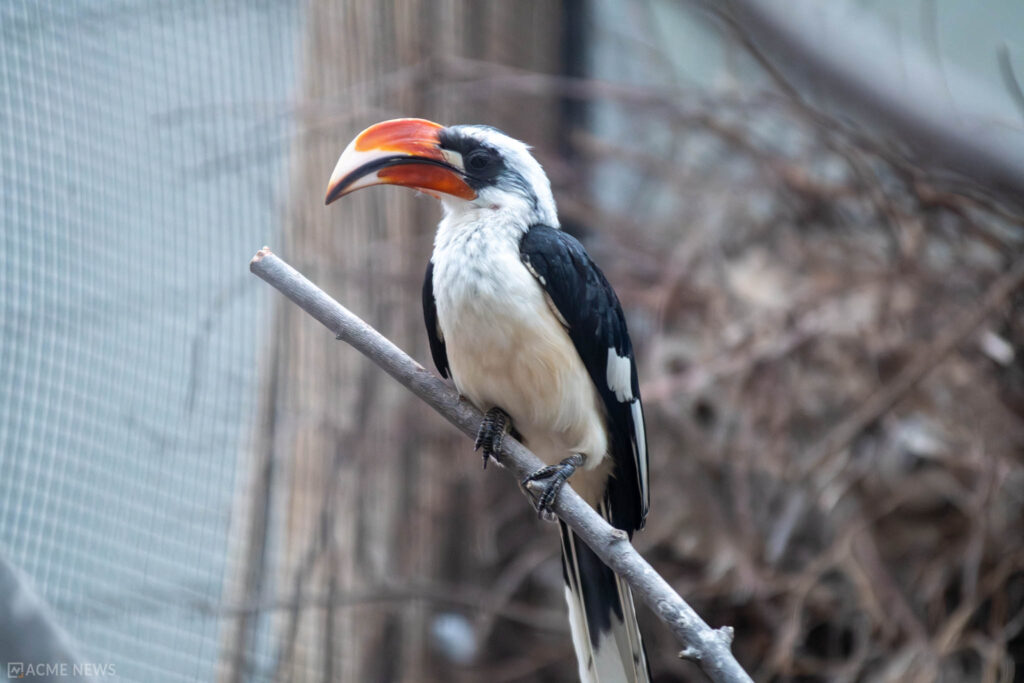
ASHEBORO, N.C.(ACME NEWS) — The Desert Dome at the North Carolina Zoo recently became the new home to a pair of rare African birds.
Two Von der Decken’s Hornbills arrived at the Zoo several months ago: Jake, a male from the Los Angeles Zoo, and Zuri, a female from the Rosamond Gifford Zoo in New York.
After spending about a month in quarantine, a standard precaution, the pair were introduced and now reside together in the Desert Dome.
Von der Decken’s Hornbills (Tockus deckeni) are distinctive birds found in the arid regions of East Africa, particularly in Somalia, Kenya and Tanzania.
The bird’s distinguishing feature is its large bill, also called a horn. “For them it’s a tool,” said Eric Mahan, a keeper at the Desert Dome. “Most birds use their beaks as tools, but for hornbills, their beak is like a Swiss Army Knife because they’ll use it to catch food, but they’ll also use it to smooth out and carve out the tree cavity if they need to — kind of fix it up as they’re getting ready to nest.”
The species are cavity nesters that use tree hollows to create nesting sites. “The females and the males will try and find a tree cavity that she can fit in,” Mahan said. “They will completely seal her in when she’s ready with a little bit of clay, only leaving just enough of a gap that the male can feed her through it.”
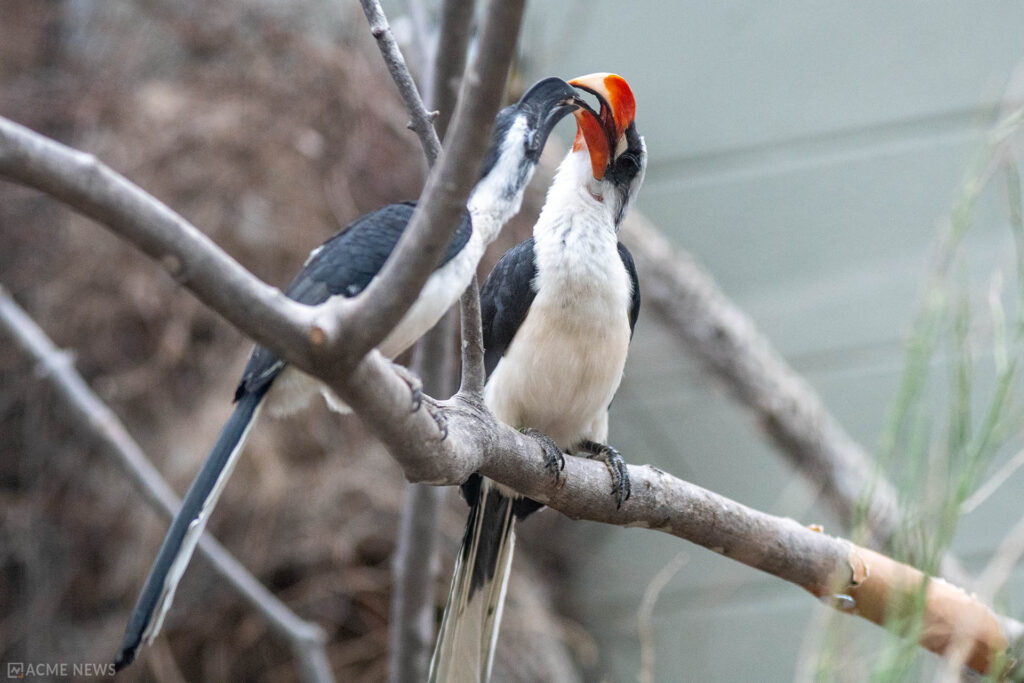
For two months, the female remains sealed in the hollowed-out tree while she lays eggs, lets them hatch and cares for the babies.
However, that unique nesting habit contributed to the bird being placed on the endangered species list. In Africa, fallen and hollowed-out trees are often gathered for firewood used for sanitizing water and cooking. To help preserve the birds’ natural habitat, conservationists have planted trees and developed a special charcoal made from animal and human waste.
“They’ve been able to develop this charcoal that is made from the droppings of both humans and cattle, and then they’re able to create this product that actually burns longer and sometimes burns even a little hotter than wood itself,” Mahan said.
The pair of Von der Decken’s Hornbills are part of the Association of Zoos and Aquariums Species Survival Program. Mahan said the Zoo hopes the pair will breed.
“Our hope is that they breed and we’re going to have some babies, but only time can tell,” he said.
Von der Decken’s Hornbills are named after Baron Carl Claus von der Decken (1833-1865), a German explorer who explored East Africa during the mid-19th century. He was the first European to attempt to reach the summit of Mount Kilimanjaro in Tanzania, failing on two separate attempts.
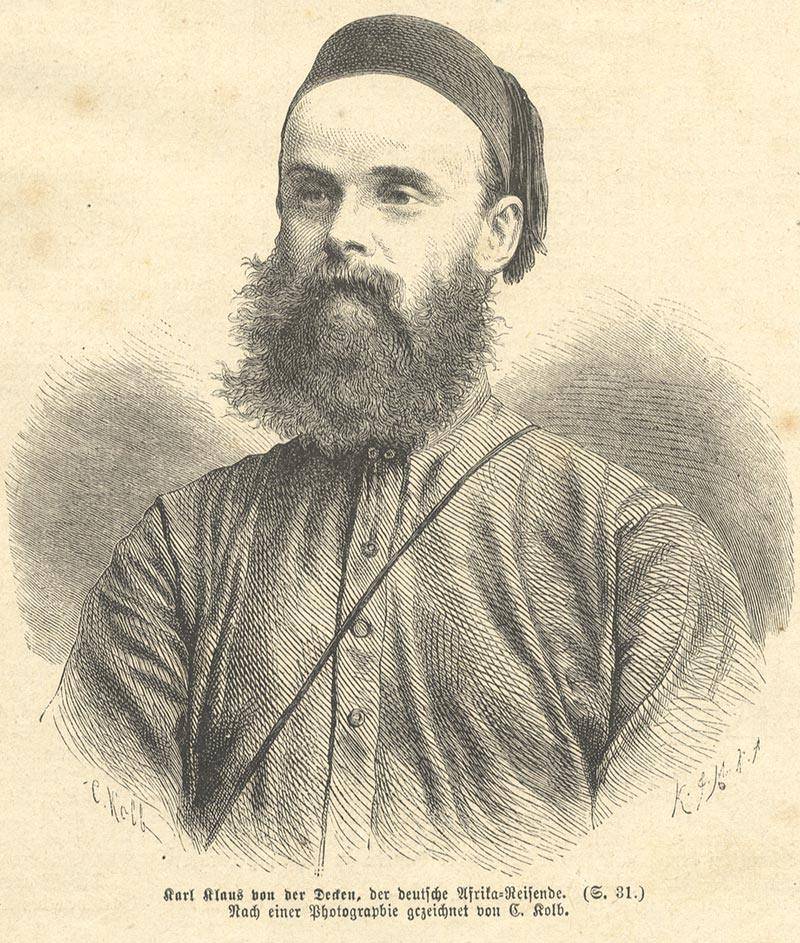
During an 1862 expedition to nearby Mount Meru, about 40 miles away, von der Decken is believed to have first documented the unique bird that would later bear his name. Three years later, von der Decken and three companions were killed by local Somalis during an 1865 expedition to Somalia.
The birds may look familiar to those who have seen Disney’s “The Lion King.” In the 1994 animated feature, the character Zazu is based on the red-billed hornbill. The 2019 live-action remake features a character more closely resembling Von der Decken’s Hornbills. Disney’s Public Relations department confirmed that Zazu is a yellow-billed hornbill.
Visitors can see the Von der Decken’s Hornbills in the Desert Dome’s first exhibit on the left after entering.
###