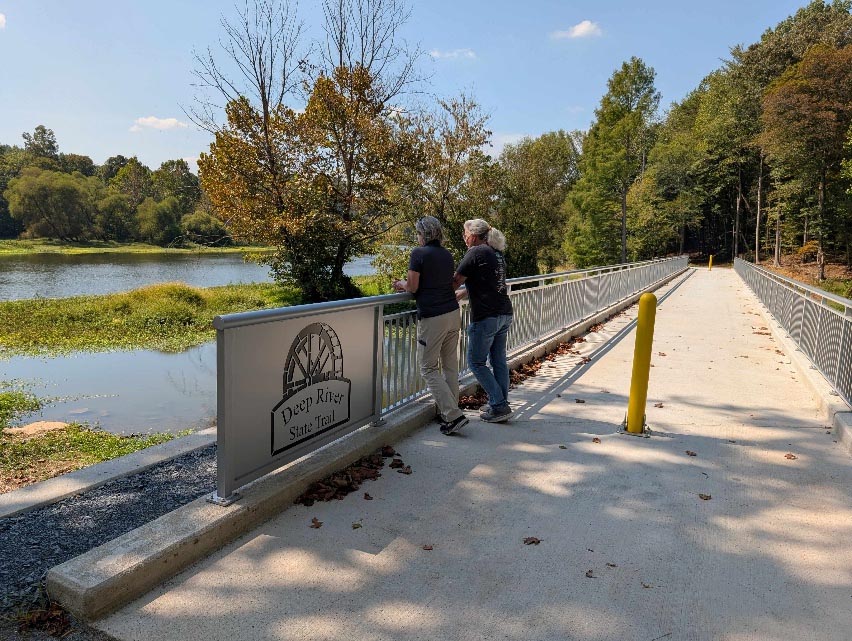
ASHEBORO, N.C. (ACME NEWS)—A clever solution to a cash flow problem is bringing millions in investment in federal trail money to several Randolph County towns who couldn’t afford to spend hundreds of thousands of dollars upfront and wait for reimbursement.
For years, federal trail grants came with a catch that locked out many small towns: applicants had to spend their own money first, then wait 6 to 15 months for reimbursement. Franklinville, Ramseur, and Randleman—municipalities with limited cash reserves—couldn’t afford to write a $100,000 check and wait for reimbursement up to or more than a year later. Randolph County solved the problem by stepping in as grant administrator for those smaller towns.
The county covers upfront costs for trail projects on behalf of smaller municipalities and manages the complex grant timelines and reimbursement processes that would have been impossible for towns to handle alone.
In addition, the county allocated $1 million in strategic planning funds to fund projects listed in the County’s Conceptual Plan for the Deep River Trail adopted in 2017. A move that unlocked nearly $1.7 million in state and federal grants—bringing the total trail investment in Deep River Trail projects in Franklinville, Randleman and Ramseur to more than $2.6 million.
“It would have been impossible without the help,” said Beverly O’Brien, Franklinville’s town clerk and finance officer. “We can do it if it’s reimbursable within a quarter, but a lot of those state grants take much longer than that. You’re looking at $100,000 in engineering costs alone, and waiting 15 months to get it back.”
In Franklinville, that looks like $319,055 from the county as part of a $1.18 million budget for the Bush Creek Bridge, a 150-foot span completed in August 2025 that was the first phase of the Franklinville-to-Sapona rail trail. The second phase—the Bush Creek Trailhead—is currently under construction and includes a parking area, trail access, and a 0.35-mile connector to the bridge. Additionally, Franklinville connects westward to Ramseur via the Sandy Creek Bridge, a 75-foot bridge completed in September 2024 that links a 2.5-mile Franklinville trail section with a 0.75-mile Ramseur section, creating a continuous 3.25-mile corridor. The county invested $456,600 toward the $691,600 project.
Franklinville’s trail success has earned broader recognition. VisitNC has designated Franklinville as an official “Trail Town,” a certification the municipality will receive at the Great Trails State Day celebration on October 17.
Ramseur has two additional projects underway. The Harlan Creek Bridge, still in design phase, will be a 195-foot span that connects two currently separate 0.75-mile sections of the Ramseur Rail Trail and will complete a continuous 4-mile trail running from Franklinville through Ramseur.
“When the bridge is complete, you can start at the Rail Trail in downtown Ramseur and walk or bike all the way to Franklinville,” said Carol Akers, Ramseur’s town clerk and finance officer. “This is already bringing tourism to our downtown area.”
Akers notes that downtown Ramseur, once a thriving hub with shops and services, had become neglected in recent decades. “The river started Ramseur and the river will bring it back to life,” she said. The trail is already showing signs of that revival, with new businesses opening and residents seeing increased activity.
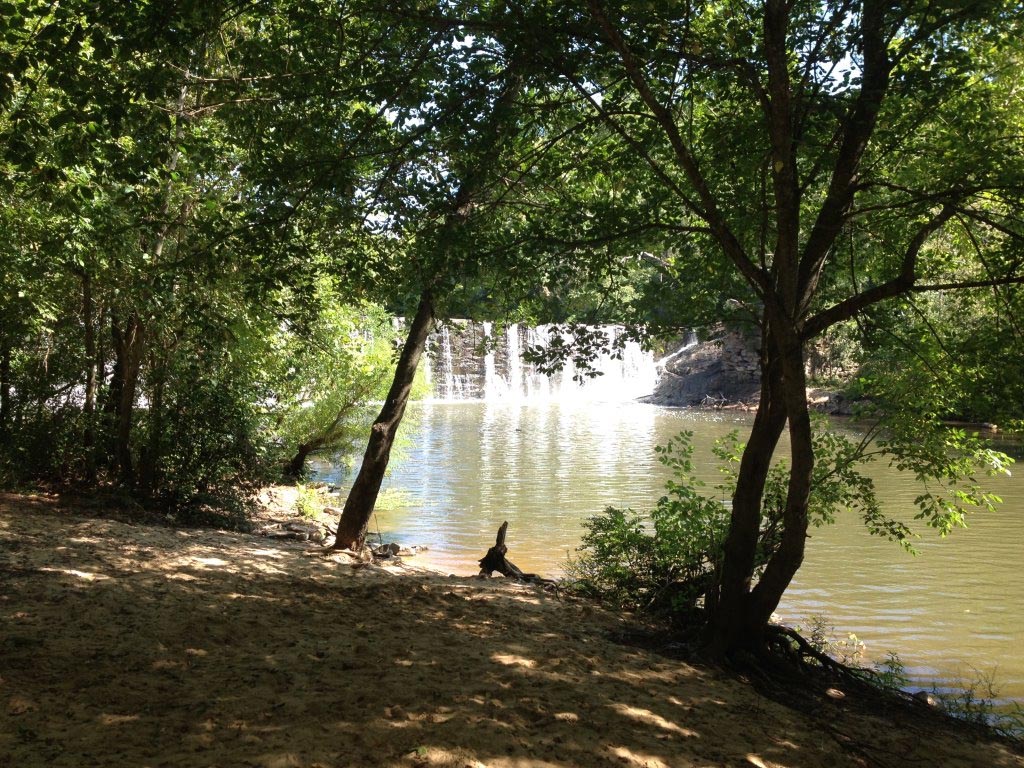
Finally, the Randleman Dam Blueway will create a 2-mile paddling corridor below Randleman Dam, providing canoe and kayak access to the Deep River in partnership with the Piedmont Triad Regional Water Authority and the North Carolina Wildlife Resources Commission.
Once complete, the five projects create a continuous 4-mile hiking corridor from Franklinville through Ramseur, a separate 1.75-mile trail in Franklinville, and a 2-mile paddling corridor below Randleman Dam. Together, they transform three disconnected trail segments into linked recreational corridors—made possible because Randolph County absorbed the grant administration burden that small towns would have struggled with on their own and provided $1million in strategic planning funds.
“The county’s ability to put up the front money and manage the administrative side is what made all of this possible,” Mary Joan Pugh emphasized.
Randolph County’s willingness to absorb grant administration work for smaller municipalities has positioned it as a regional leader in trail development. The five Deep River projects are just part of that larger investment. When combining efforts with other municipalities that handle their own grant work—Archdale, Asheboro, and Trinity—Randolph County as a whole has invested $3 million into local trails and parks with that investment unlocking around $5 million in federal and state funds, creating an $8 million total trail portfolio across the county.
The county is currently administering its fourth federal Recreational Trails Program grant, with funding drawn from the federal Recreational Trails Program ($750,000), the state Complete the Trails Fund ($860,828), and the state Great Trails State Program ($644,250).
This capacity didn’t happen overnight. The county was an early supporter of the regional Piedmont Legacy Trails organization since it was formed in 2017 and the Great Trails State Coalition which helped set the foundation for accessing these diverse funding streams, positioning Randolph County to lead where other small-county governments couldn’t.
“The strategic plan laid the foundation for some of the trail work along the Deep River,” Jesse Day, representative of the Piedmont Triad Regional Council, which co-chairs Piedmont Legacy Trails told commissioners at the July 6th meeting.
Randolph County already sees roughly $25 million annually in visitor spending tied to trails and outdoor access. Connected corridors—like the ones these five projects will create—expand those assets and their economic return. Once completed, these projects will link to state trail systems and create continuous paddling and hiking routes that benefit residents and visitors alike.
###