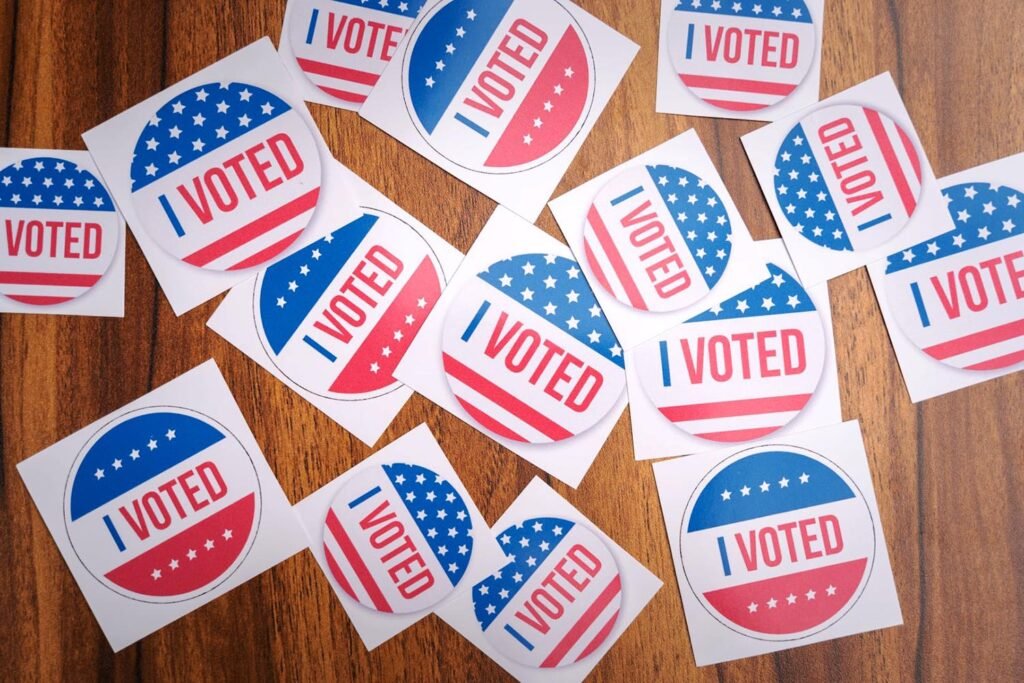
RALEIGH N.C. (ACME NEWS) — North Carolina voters approved all three constitutional amendments on the Nov. 3 ballot, writing photo ID rules, a 3.5% income tax cap and a coming limit on local property tax increases into the state constitution.
All three Republican-backed measures passed with roughly 60% of the vote, according to unofficial results from the North Carolina State Board of Elections after clearing the General Assembly largely along party lines. The governor has no veto power over proposed amendments.
Photo ID for all voters
The first of three amendments asked voters whether to “require all voters, not just those presenting to vote in person, to present photo identification before voting.” It passed with 2,474,819 votes in favor, or 60%, and 1,676,844 against, or 40%.
Voters approved a constitutional photo ID requirement for in-person voting in 2018. Current state law already requires mail-in voters to submit a copy of a photo ID or an ID exception form, but that rule was not in the constitution.
Critics argued the change was unnecessary because state law already covers absentee ballots, also called mail-in ballots. In December 2024, after the Republican supermajority in the General Assembly voted to put the amendment on the 2026 midterm ballot, Katelin Kaiser, policy director of Democracy North Carolina, told The News & Observer that the amendment “is another attempt to disenfranchise voters by mail, and it is working. Legislative leadership has made it more difficult for students, older people, and people who are disabled to vote by mail in North Carolina.”
Supporters said the amendment adds a security safeguard. “Voter ID is a commonsense security measure that needs to apply equally to all voters,” Sen. Warren Daniel, R-Burke, a primary sponsor of the bill, said in December 2024, according to the Wilmington StarNews.
The amendment does not change how voting works now, because North Carolina already requires at least a photocopy or a completed ID exception form for mail-in ballots.
FREE VOTER ID
Don’t have an acceptable photo ID for voting? Registered North Carolina voters can get a free voter ID from their county board of elections.
Get a free voter IDIncome tax cap
The second amendment keeps the state income tax rate “from being raised higher than three and one-half percent (3.5%).” It passed with 2,571,609 votes in favor, or 62%, and 1,581,048 against, or 38%. It was the strongest performer of the three.
The amendment replaces a 7% cap voters approved in 2018. It covers both personal and corporate rates. The personal rate is 3.99% this year, and state law already schedules it to fall to 3.49% in 2027. The cap does not cut taxes by itself. It bars future legislatures from raising the rate above 3.5% unless voters approve another amendment.
Critics said the cap would limit lawmakers’ ability to raise money quickly during recessions or after natural disasters. Gov. Josh Stein, a Democrat, called the measure “a con, a cynical shell game and a millionaire protection cap” at a press conference in May 2026. “It will not put any more money in anyone’s pockets. But what it will do is make regular people pay the consequences of it next year and years into the future because it will insulate the very wealthy from ever having an increase in their income tax,” Stein said.
Supporters said low rates attract businesses and force lawmakers to restrain spending. “North Carolina’s formula of low taxes, responsible spending, and reasonable regulations is working,” Senate Leader Phil Berger (R-Rockingham), said in May when Republican leaders announced a budget framework, according to WNCN.
Property tax levy limits
The third amendment, titled “requiring limits on property tax increases by local governments,” directs the General Assembly to enact general laws limiting how much local governments can raise their property tax levies. It passed with 2,503,763 votes in favor, or 60%, and 1,640,446 against, or 40%.
The Tax Foundation, a tax policy nonprofit, says property taxes are the primary tool for financing local governments.
“In fiscal year 2023, property taxes comprised 28.9 percent of total state and local tax collections in the United States, more than any other source of tax revenue, despite being levied almost exclusively at the local (not state) level. Local governments rely heavily on property taxes to fund schools, roads, police departments, fire and emergency medical services, and other services associated with residency and property ownership. Property taxes accounted for 70.0 percent of local tax collections in fiscal year 2023.
A levy limit caps how much property tax revenue a local government can collect from one year to the next, according to the North Carolina Association of County Commissioners. For example, a county that collected $100 million in property taxes and faced a 3% limit could budget no more than $103 million the next year. That differs from the state’s current cap, which limits the tax rate to $1.50 per $100 of assessed value rather than total revenue.
The amendment does not create a limit itself or set a percentage. It requires the General Assembly to pass laws limiting how much property tax levies can increase, and those laws may include exceptions. Lawmakers are expected to decide the details in 2027.
Opponents said a levy limit could make it harder for local governments to pay for services. In a statement to CBS 17 in May, Kevin Leonard, executive director of the North Carolina Association of County Commissioners, said the bill “does not provide immediate property tax relief.” He said it “would restrict counties and their ability to plan for growth” and could also affect “essential county services, such as public safety, education, health, and human services.” The association also said levy limits can widen disparities between counties, because a percentage-based limit gives counties with smaller tax bases less room to grow.
Supporters said local governments have let tax bills climb too far. “Property taxes are out of control,” House Speaker Destin Hall (R-Caldwell), said in March, according to the News Argus. Rep. Brian Echevarria (R-Cabarrus), the bill’s sponsor, said asking voters is the next step toward “a modern, fairer, and more predictable property tax system.”
What happens next
The State Board of Elections is scheduled to certify the statewide results Nov. 24. All three amendments take effect upon certification. The income tax cap applies to taxable years beginning on or after Jan. 1, 2027.
###