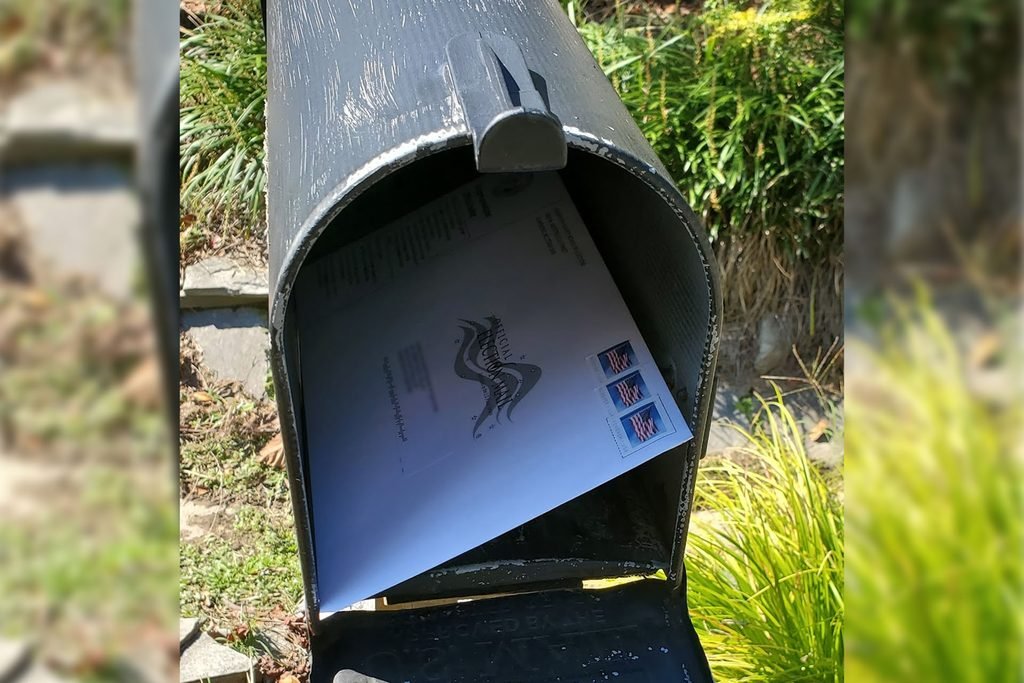
ASHEBORO NC (ACME NEWS) — A federal judge ruled Monday that North Carolina can reject mail-in ballots in this year’s election if the voter didn’t seal the ballot inside its envelope, a rule the State Board of Elections put in place last month.
U.S. District Judge Thomas Schroeder of the Middle District of North Carolina denied a request from three voting rights groups and two voters to stop the State Board of Elections from rejecting mail-in ballots when the inner ballot envelope isn’t sealed, even if the mailing envelope arrive sealed. Schroeder ruled only on that request to halt enforcement of the rule, not on whether the rule is legal, letting the state keep enforcing the requirement through the midterms and while the lawsuit continues.
Voting by mail in N.C.
To vote by mail in North Carolina, a registered voter first has to fill out Absentee Ballot Request Form either online or on by paper. That form requires the voter to provide a date of birth and either a North Carolina driver license or ID number or the last four digits of their Social Security number, and must be sighed by the voter.
Once the ballot arrives in the mail, the voter marks it in front of two witnesses (or a notary) who need to see the voter mark the ballot —but not how they vote. The voter then places the ballot, and only the ballot in the inner ‘ballot envelope’ and seals it. The voter signs the back of that envelope, and each witness signs, prints their name and gives their full address there. (A notary can certify the envelope instead of two witnesses.)
Next, the voter places a copy of an acceptable photo ID in the clear sleeve on the outside back of the ballot envelope. The sealed ballot envelope then goes inside the larger outer return envelope, which is also sealed. The outer envelope can be mailed with $1.98 in postage for the 2026 general election, or taken to the county board of elections office or an early voting site. It cannot be returned to a polling place on Election Day.
The ballot must reach the county board by 7:30 p.m. on Election Day, and only the voter or their near relative or legal guardian may deliver it, unless the voter has a disability and needs help.
What changed
North Carolina voters used to mail back their ballots in a single envelope. That changed in September 2023, when the State Board of Elections began using two envelopes to handle the state’s new photo ID requirement. Counties have to review a voter’s ID copy separately from the ballot, so the inner ballot envelope now has a clear sleeve on the outside for the ID copy, along with spaces for the voter and witnesses to sign. It goes inside an outer mailing envelope, which keeps the ID copy private while in the mail.
Local county elections boards were instructed by the state to count a ballot as long as either envelope was sealed. A voter who forgot to seal the inner envelope still had their vote counted as long as the outer mailing envelope arrived sealed. The board threw out a ballot only if both envelopes were unsealed or both looked like they had been opened and resealed.
In 2024, the North Carolina Republican Party and the Republican National Committee asked the board to rule that the practice violated state law, which says a ballot must be “sealed in the container-return envelope,” the legal term for the inner ballot envelope. The board kept the practice that August, and Republicans sued.
That lawsuit ended in a federal court order in December 2025 that required the board to look at the question again. On Feb. 2, the board voted 3-2 that its old guidance was “not correct.” It wrote a formal rule requiring the inner envelope to be sealed, but the rule needs legislative approval, and the General Assembly won’t meet again until after the election. So on Sept. 4, the same day counties began mailing out absentee ballots, the board put the change into effect with a memo to county election offices.
Since then, a mail-in ballot is “spoiled,” meaning it can’t be counted, if the inner envelope arrives unsealed or the ballot arrives outside it, no matter how the outer envelope is sealed, and Monday’s ruling by a federal judge said the state can continue with the new rule, while the lawsuit continues.
Schroeder wrote that early voting has already begun and that courts should not change election rules this close to an election. He also said the plaintiffs waited too long to file and had not clearly shown they would win. He found the burden on voters likely modest because they can get a replacement ballot or vote in person.
The State Board told the court 31,582 absentee ballots had been cast statewide as of Oct. 14. Election board members in two counties named in or near the lawsuit say ballots are already being rejected. Guilford County board member Carolyn Bunker said more than 2% of ballots received over three weeks were thrown out for an improperly sealed inner envelope, according to Democracy Docket. Wake County board member Gerry Cohen put his county’s rate above 2.5%. Randolph County places their rate at between 1.5 and 2% according to county election officials.
What happens to a voter who makes the mistake
If the problem is found by the Oct 30, the Friday before Election Day, elections staff must spoil the ballot and send the voter a new package within one business day. A written notice explains the problem and tells the voter they can vote in person during early voting or on Election Day.
If it’s found on or after Oct 31, the Saturday before Election Day, staff must contact the voter the same day. Staff tell the voter the ballot cannot be counted, that there is not enough time to mail another and that they may vote in person if there is still time.
Voters who have already returned their ballot can track the status of their ballot at https://northcarolina.ballottrax.net/voter/. Anyone with questions can contact their local county Board of Elections office.
###
###