PITT COUNTY N.C. (ACME NEWS) — A Pitt County dog trainer has posted dash and body camera footage of a N.C. state trooper killing her two dogs after the N.C. Court of Appeals upheld an order barring public release.
Lydia Nikac told WRAL she posted the footage after the appeals court ruled it could not be publicly released, and said she is “just waiting for a knock at the door.” Nikac went on to explain “it’s one thing when you assassinate my dogs in front of me. It’s another thing when you try to cover it up. Because the pain and the torture with not being able to get justice for my dogs can make somebody go crazy.”
What the video shows
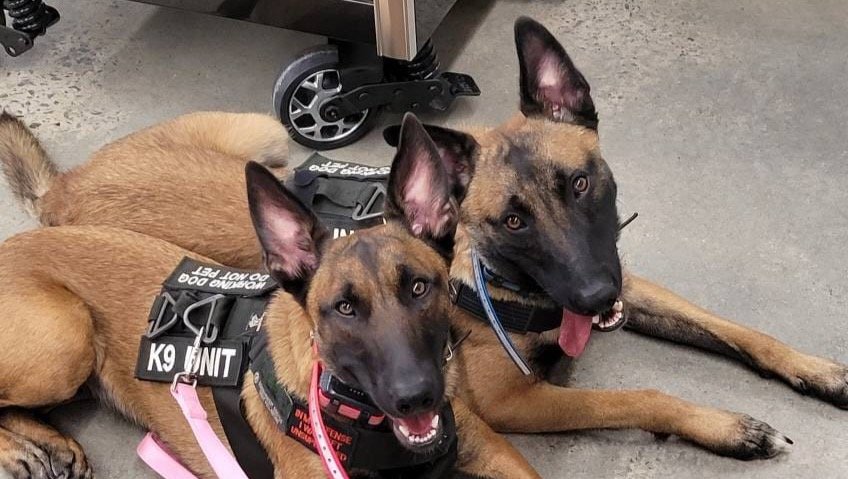
Multiple videos from dash and body camera footage, posted to a YouTube channel called Justice4BonnieAndClyde, show Trooper Justin Maness arriving at Nikac’s home on Oct. 5, 2024. He finds her dogs, Bonnie and Clyde, both trained Belgian Malinois circling a man on the ground, later identified as Kevin Toler. Nikac says she called 911 and used the dogs to detain the man breaking into her car when he tried to leave with property from her vehicle.
Stepping out of his patrol vehicle, Maness is heard telling Nikac to control her dogs and warning that he will shoot the dogs if they comes toward him. Nikac can faintly be heard yelling, and she says she was telling the trooper to tell the man to lie down and for the trooper not to approach the property until she got her dogs.
Less than 40 seconds after stepping out of his patrol car, Maness begins to walk toward the property. One dog begins to approach him, and he opens fire just out of frame. Multiple shots can be heard on the dash camera, followed by screams from Nikac, while the trooper calls ‘shots fired’ over the radio and yelling for the man to come over over and stand in front of his patrol vehicle. Both dogs died at the scene.
“I can’t live my life without those two. They were everything to me,” Nikac told Reason. Neighbors describing the dogs as friendly.
Nikac told WRAL the dog “trotted over” out of curiosity and did not charge at the trooper. Nikac, who trains police K-9s, said Bonnie and Clyde were demonstration dogs for her business. The N.C. State Highway Troopers Association has described the shooting as justified self-defense.
⚠ Content warning: Contains audio of gunshots and distress.
Why the video wasn’t public
Passed in 2016, the CLEAR statute (custodial law enforcement agency recordings) makes footage from police body-worn and dashboard cameras nonpublic. Only a judge can order a recording released, so even agencies that want to release footage must first seek the court’s permission.
North Carolina’s body camera law has long drawn mixed reactions from the public. In a 2021 Acme News survey of just over 1,000 North Carolina residents, a majority said body camera footage should be public record, with 55% in agreement and only 33% opposed. Opinion was more split on whether cameras deliver accountability: 40% said they promote transparency and accountability, and 40% said they don’t, but 68% said they see body cameras mainly as a tool for police to gather evidence, and not for accountability.
Nikac petitioned the court for the recordings 18 days after the shooting. At the first hearing, her attorney said she needed them to evaluate a possible civil claim over the dogs’ deaths, according to the appeals opinion.
The Highway Patrol and Pitt County Sheriff’s Office opposed public release, citing pretrial publicity that could affect the criminal case against Toler, who was arrested that day, and officer safety and privacy.
In February 2025, Judge Matthew Houston ordered the recordings and investigative file released to Nikac and her attorney but limited their use to legal proceedings between Nikac and the agencies. According to the order, they may not otherwise be “disclosed, disseminated, or made public” without prior court authorization. It also lets a judge in any civil case authorize broader disclosure, including in discovery. The court found that wider release “might create a serious threat to the fair, impartial, and orderly administration of justice” and that “one or more criminal investigations are ongoing.”
Toler was charged with felony breaking or entering a motor vehicle, assault on a female and misdemeanor larceny, according to court records. In the recordings, he can be heard giving officers and emergency personnel differing accounts of what happened.
On Aug. 6, 2025, Toler entered Alford pleas to all three charges and received a 7-to-18-month sentence, according to court records. An Alford plea allows a defendant to maintain innocence while accepting a conviction.
The appeal
Nikac appealed a month later in March 2025. On Oct. 7, the Court of Appeals unanimously affirmed the order in an opinion by Judge Tobias Hampson, joined by Judges Donna Stroud and Jeff Carpenter. The appeals opinion looked at the record as it stood in early 2025 and does not address that Toler’s case had ended.
The panel held that the order did not abuse the judge’s discretion under the statute and that it met the First Amendment test from the U.S. Supreme Court’s Seattle Times Co. v. Rhinehart, because it served a substantial government interest and went no further than necessary. The court said the order was not a “classic prior restraint,” because Nikac got the recordings only through a process it called a “matter of legislative grace.”
The opinion says Nikac remains free to speak publicly about the recordings and can ask the court to revisit the restriction if she sues.
Her attorney, John Kirby, argued the restriction violates her free-expression rights.
What’s next
Nikac told WRAL she plans to appeal. She said the restrictions have made it harder to gain public support and raise money for an attorney. A GoFundMe organized by a supporter is raising money for Nikac’s legal fees, and it had topped $9,000 as of Oct. 13.
###