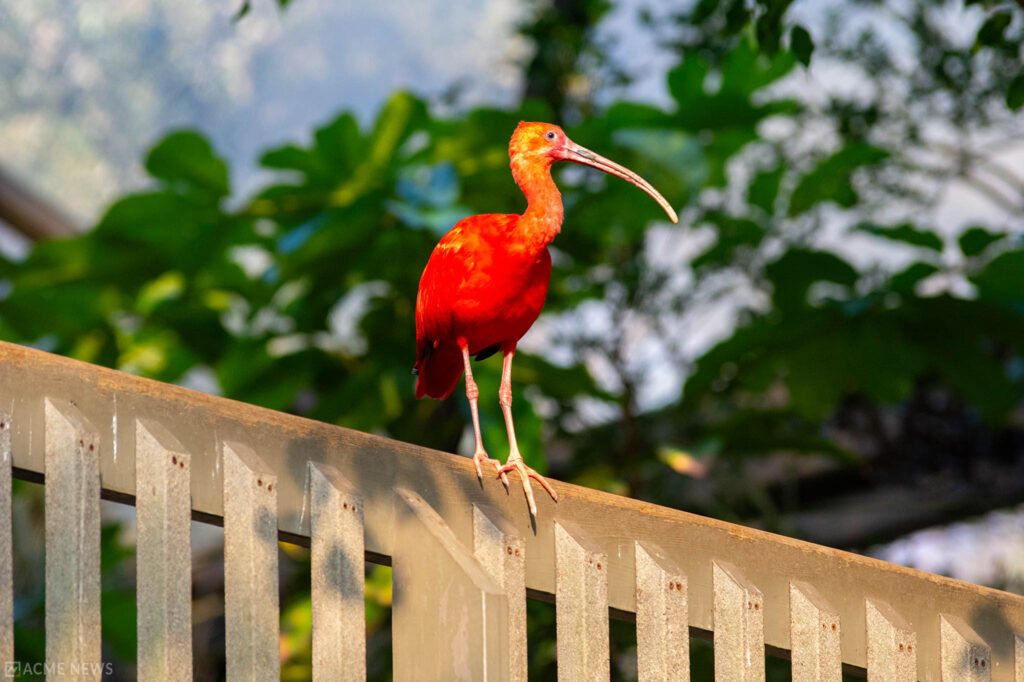
ASHEBORO N.C. (ACME NEWS) — When construction crews begin tearing down the North Carolina Zoo’s R.J. Reynolds Forest Aviary this summer, it will close the book on a guest favorite habitat that stood for over 40 years.
An engineering report by the North Carolina State Construction Office (NC SCO) details the issues that doomed the aviary to destruction: acrylic roof panels that couldn’t be replaced, corrosion on steel structural columns, and soil erosion and sinkholes that rendered this entire site unsuitable for construction.
The $1.5 million demolition is expected to begin as soon as this month following a pre-construction meeting, according to Sara Pack, chief communications and PR officer for the North Carolina Zoo.
What Happened
When the Zoo closed the Aviary on January 24, 2022, as a precaution due to avian flu, there was every expectation by guests that it would reopen soon. The closure gave the Zoo an opportunity to bring in engineers from the State Construction Office to get a look inside the 1981 dome for a closer inspection.
Their report followed about two months later, in April 2022, the Zoo announced the aviary’s closure was permanent. Ninety-three birds representing 33 species and more than 2,000 plants across 450 species were relocated to other parts of the Zoo or transferred to other accredited zoos. Debbie Zombeck, the Zoo’s curator of birds and supervisor of the aviary for 29 years, called the loss of the immersive habitat — guests often said they felt as though they’d stepped into a real tropical forest — a “heart-wrenching decision” — one Zoo leadership said was necessary for safety.
The public reaction was swift and negative. A survey conducted by Acme News that April found 89% of respondents wanted the aviary rebuilt. By the summer of 2023, the Zoo and the N.C. Department of Natural and Cultural Resources were working to secure funding for both demolition and a replacement, and Gov. Roy Cooper’s 2023-25 budget proposal included $60 million for what it called “Zoo Aviary replacement.” That funding was ultimately approved.
Now, three years later, the demolition itself is finally underway — the first physical step toward a new aviary that likely won’t open before 2030.
Why not repair the Aviary?
When officials with the State Construction Office completed their inspection of the aviary in March 2022, their report showed the building’s problems started at the roof and compounded from there. The dome’s polycarbonate panels — installed to replace the original 1981 acrylic panels, which are no longer manufactured — were themselves already failing. Inspectors found the panels visible stress-cracks from decades of UV exposure and heat, and Zoo staff told them one panel had already failed after being struck by a small bird.
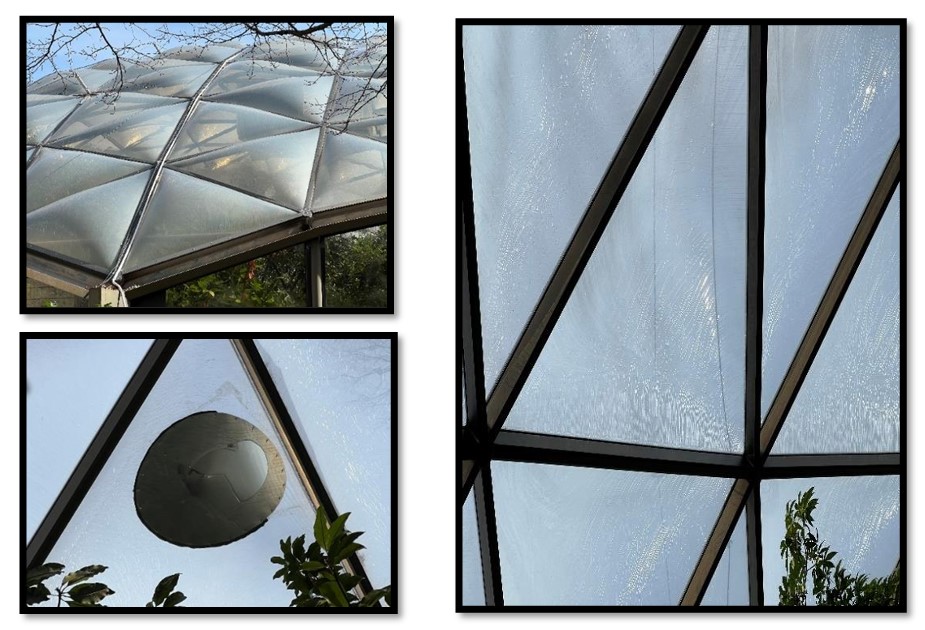
Because the cracking was widespread, inspectors said it was “safe to assume that all the polycarbonate panels are suspect,” warning the panels could fail from impacts like falling tree branches or hailstones. Compounding the problem, Zoo staff said their own engineering consultant found that identical polycarbonate panels aren’t available either — meaning any fix would require an entirely different material.
That’s where the roof problem became a structural one. Any replacement material — glass or a different polycarbonate — would be significantly heavier than the current panels, and the report found the aviary’s existing frame likely couldn’t carry that added weight.
Housing an indoor rainforest for nearly four decades had also taken its toll on the aviary’s steel structural columns. Inspectors found corrosion throughout, with some columns showing measurable loss of steel section — deterioration the report said would need to be corrected if the building were ever rehabilitated.
A heavier roof would require a more substantial support structure underneath it. Those repairs and replacements in turn would need to meet current building codes for wind and snow loads the 1981 structure was never designed to meet.
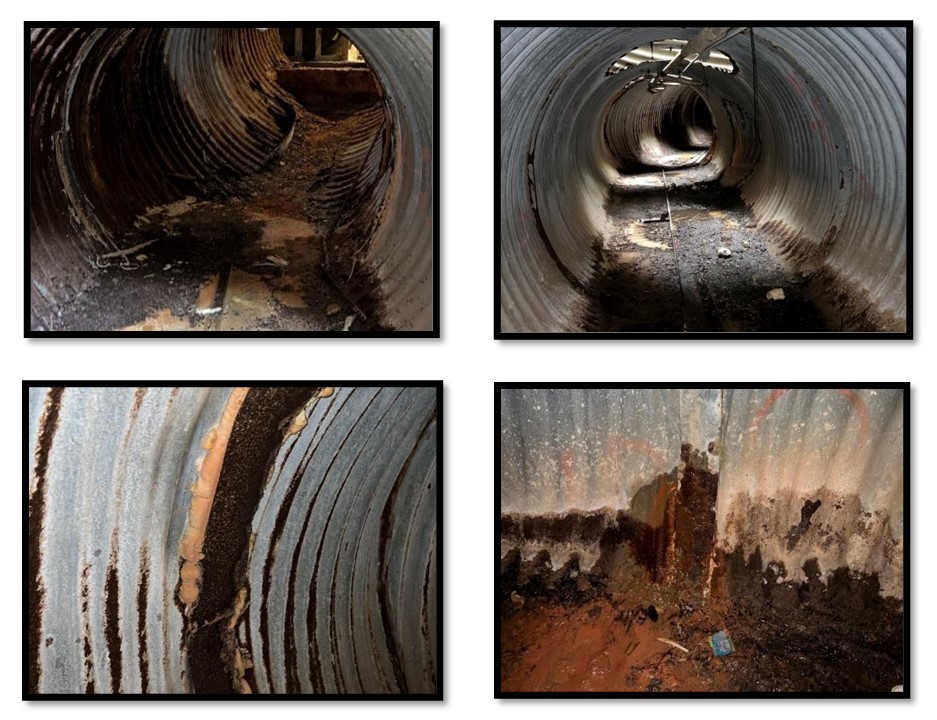
The most consequential finding, though, was underground. Inspectors discovered severe corrosion in the corrugated steel tunneling beneath the aviary, caused by long-term water infiltration, along with signs of underground soil erosion and sinkholes. The source and extent of that erosion was unclear from a visual inspection alone, but the report was blunt about the risk:
The State Construction Office concurs that the Forest/Aviary Structure in its current state and on its current site is not sustainable for future use. Subterranean unknowns at the current site will make it extremely risky to even attempt to evaluate the existing structure for renovation.
The report says a cost for replacement “cannot be estimated without a detailed design proposal by a licensed design professional.” That’s because, before any repair cost could even be calculated, the report said the Zoo would first need to pay for “a structural evaluation of the current building and a geotechnical evaluation of the current site” — just to determine whether renovating the aviary was possible at all.
In other words, the repairs needed to re-open the aviary were essentially the same as building a new one — with the added cost of first having to prove the ground underneath it could still hold a building at all.
What’s Next
Of the $60 million allocated for the aviary’s replacement, $3 million has been released so far to begin the design phase, leaving about $57 million for construction once a design is finalized.
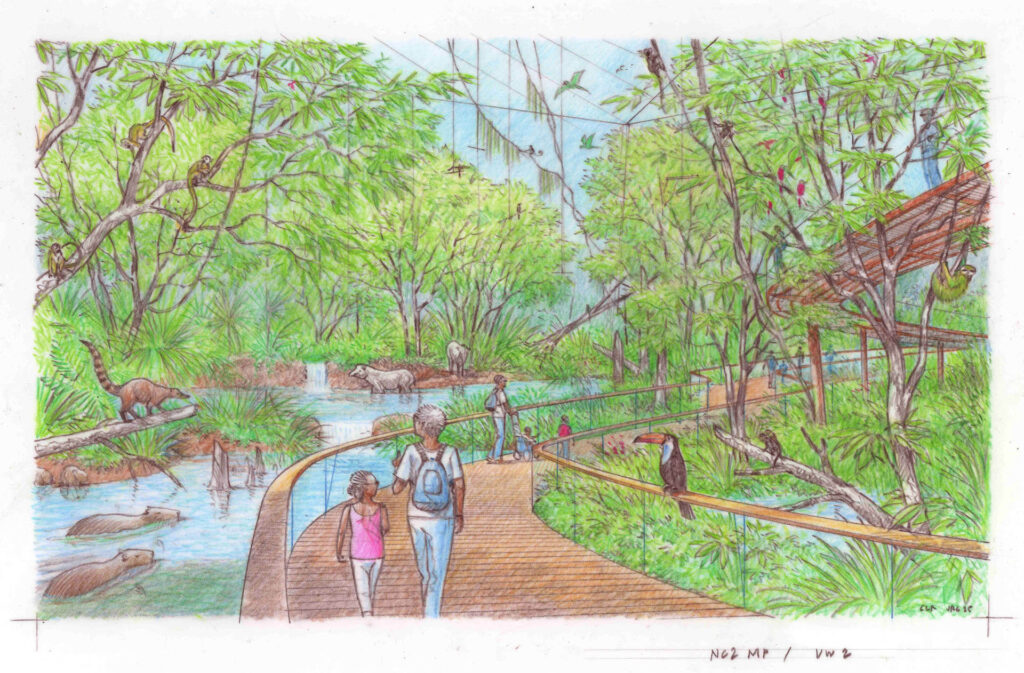
Design firm CLR Design produced conceptual renderings during the Zoo’s master planning process, though Pack cautioned the designs are preliminary and could change substantially once the formal design phase begins.
One detail is already settled: the new aviary will sit on a different site within the Zoo, chosen specifically to avoid the erosion and drainage problems that undermined the original structure — a direct response to the geotechnical concerns raised in the 2022 report.
The Zoo has not announced a timeline for soliciting design bids or beginning construction. Sources familiar with the project have estimated a new aviary may not reopen before 2030.
###