ASHEBORO N.C. (ACME NEWS) — Eight months after Iryna’s Law took effect, the Randolph County jail is nearly full and its population keeps climbing, a pattern showing up in jails statewide.
Passed by the General Assembly last fall after the August 2025 killing of Iryna Zarutska on a Charlotte light-rail train, Iryna’s Law took effect Dec. 1, 2025, and its impacts are already being felt in local jails across the state.
The law tightened North Carolina’s pretrial release rules — eliminating written promises to appear, a free release option long used for lower-level offenses, and keeping anyone charged with a broad new category of “violent offenses” locked up by default.
Supporters, like the North Carolina Sheriffs’ Association, said Iryna’s Law is “a step in the right direction” to address what it calls “catch and release” policies that let “dangerous defendants back on the street.” But more than seven months in, sheriffs and jail administrators across the state — including in Randolph County — say the law is also holding far more people in custody, for far longer, and stretching jail staffing and budgets to the limit without any state funding attached to cover the cost.
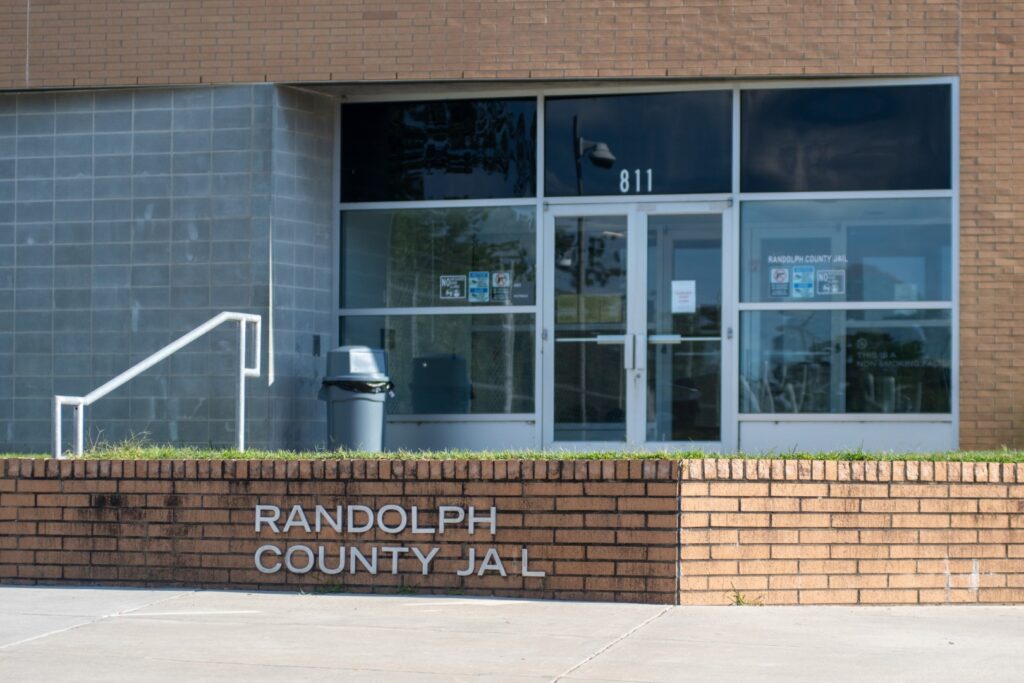
As of early August 2026, the Randolph County Jail held an average daily population of about 375 people, just 47 beds shy of the facility’s 422-bed capacity, and that number has been going up nearly daily.
What the law changed
Iryna’s Law applies to anyone arrested and brought before a magistrate or judge on or after Dec. 1, 2025 — regardless of when the underlying crime is alleged to have happened — for the decision on whether they can go home while awaiting trial, must post bond to do so, or will be held in jail until their case is resolved.
Pretrial release isn’t about guilt or innocence. Nearly everyone held in the Randolph County jail has been arrested and charged with a crime — but not convicted of one. Under the legal system these suspects are presumed innocent while the case moves through court. Pretrial release decisions by magistrates and judges only decide if a person can wait for their court date at home, or if they will be held in jail until their case is resolved.
Before Iryna’s Law, that decision had several possible outcomes. The most common for lower-level, nonviolent charges was a written promise to appear — a form the defendant signed promising to show up for court, with no bond or fee required.
With written promises to appear eliminated, more defendants are now required to post bond to get out. For those who need time to raise that money — or simply don’t have it — even a few extra days in jail waiting on a bond hearing can carry real consequences: missed shifts can cost a job, and a lost job can cost an apartment, long before anyone has been found guilty of anything.
Defendants who would previously have been booked and released on a [written promise to appear] within hours are now held pending a bond they may not be able to post.
Randolph County Sheriff’s Office Memo
Iryna’s Law also created a new “violent offense” category covering a broad range of felonies involving assault or the threat of force, all offenses requiring sex offender registration, and a list of specifically enumerated crimes including stalking, possession of a firearm by a felon, and fentanyl trafficking, according to an Administration of Justice Bulletin published in March by the UNC School of Government.
For anyone charged with one of those violent offenses, the law flips the default. Rather than a magistrate deciding case-by-case whether to grant release, the starting assumption is now that the person stays in jail — what the law calls a “rebuttable presumption against release.”
Two more provisions in the law push the numbers up further. People with three or more prior convictions — each at least a Class 1 misdemeanor (including DUIs) — in separate court sessions over the past 10 years must now get a secured bond or electronic house arrest, no matter what they’re currently charged with. That alone captures a large share of repeat offenders.
For some charges, the law also limits who can authorize a defendant to be released: requiring a judge, not a magistrate, to set pretrial release conditions.
That shift shows up clearly in Randolph County’s own numbers. An analysis of daily population data collected from Randolph County Jail data covering August 2025 through July 2026 shows that while the jail’s population was trending down in the months prior to Iryna’s Law taking effect on Dec. 1, 2025, following its implementation, the trend reversed, showing jail populations climbing steadily.
After staying around 300 between August 2025 and January 2026, the jail’s average monthly population saw its first real spike in February, averaging 321. The trend has continued since, rising nearly every month that followed and averaging 387 as of July 2026 — leaving only 35 beds unoccupied of the facility’s 422-bed capacity.
Length-of-stay data shows a similar pattern: before Iryna’s Law, about 1 in 26 people booked into the jail remained in custody more than 90 days while their case was resolved. Since the law took effect, that ratio has grown to roughly 1 in 19.
What it’s costing the county
The jail’s nearly $13 million budget makes up more than a third of the Randolph County Sheriff’s Office’s $36.6 million budget and accounts for about 6% of Randolph County’s total $202 million budget. Costs at the jail were climbing even before Iryna’s Law took effect — increasing 16.4%, from $11.1 million in 2023-24 to $12.9 million for 2025-26.
When the 422-bed capacity is reached, the Sheriff’s Office has a choice to make.
“We can operate for a short time — a few days — over capacity,” said Col. Steven Nunn, Chief Deputy with the Randolph County Sheriff’s Office. “Then we will have to transfer inmates to other detention facilities.”
When inmates are sent to other facilities, the Sheriff’s Office is still required to cover the costs, just as it would at its own jail.
In an email to County Manager Zeb Holden, officials at the Randolph County Detention Center estimated that housing 30 inmates elsewhere for a year, at $70 a day per inmate, would cost the county approximately $821,000 — with the “potential to be a couple million dollars on next year’s budget with medical, meals and inmate housing.”
Not just a Randolph County problem
A memo prepared by the officials at the Randolph County Detention Center in mid-July cites the same trend playing out elsewhere in the state.
- Mecklenburg County’s main jail, designed to hold 1,791 people, grew from roughly 1,650 detainees in late December to more than 2,000 by May.
- Robeson County held 501 people in a 410-bed facility and was ordered by state inspectors to reduce its population.
- Buncombe County’s sheriff has described conditions there as a safety crisis, citing mattresses on holding-cell floors, doubled-up single cells and rising assaults on staff and detainees.
- Wake County has exceeded its 1,094-bed capacity, resorting to temporary bunks in open dorms and placing overflow detainees in six other counties. Wake County’s district attorney has said the jail population increase there correlates with the law’s effective date and has suggested the statute may need adjustment, while legislative sponsors continue to defend it.
Not everyone agrees the law is the cause, though — and the state’s leading law enforcement association has shifted its own position since the law took effect.
Speaking to North Carolina Health News on Dec. 22, 2025, three weeks after Iryna’s Law took effect, Eddie Caldwell — executive vice president and general counsel of the North Carolina Sheriffs’ Association — said the law’s goal was straightforward: to keep more people behind bars so they can’t reoffend while awaiting trial, and he acknowledged that would affect jail capacity.
By June, as overcrowding reports mounted from counties across the state, Caldwell’s message had changed. He told The Assembly that month that the law had “little to do with the rising number of inmates” and that he’d heard no complaints from sheriffs.
He pointed instead to other factors — chief among them a statewide backlog of roughly 1,200 inmates sitting in county jails awaiting transfer to state prison — and argued that overcrowding in many counties reflects elected officials failing to expand or replace aging jail facilities, not the law itself.
Asked about sheriffs and county officials who have pointed to Iryna’s Law directly, Caldwell said he’d want to see their underlying data analysis before accepting that link.
Randolph County completed a jail expansion program raising the number of beds from 281 in 2022 to its current 422 as of 2024.
The North Carolina Sheriffs’ Association was unable to responded to Acme News’ request to clarify these comments on deadline and said that Caldwell had left the organization in July.
Despite the climbing numbers, Nunn said RCSO does not expect to ask county commissioners for more money.
“We certainly don’t want to have to request additional funding, as we hope we can manage it within our current budget,” Nunn said. “However, if we exceed 422 for an extended period of time and have to pay for the housing of inmates in other facilities, there is a possibility of needing to request additional funding.” He added that RCSO has not requested supplemental funding since 2018 and does not anticipate needing to start now.
On staffing, Nunn pointed to existing tools rather than new hires. “We currently have plans in place to assist with any staffing issues, such as optional overtime in the detention center,” he said.
A second deadline is coming
When someone is having a mental health crisis and appears to be a danger to themselves or others, a magistrate can order them held for an evaluation. Before a judge can commit that person for treatment, two things have to happen: a first exam at a hospital emergency room or a mental health crisis center (which by law can’t be done at the jail) and — if that exam says treatment is needed — a longer evaluation at a facility with psychiatric-beds.
Normally, this process starts when someone — a family member, a witness, a police officer — goes to a magistrate and says a specific person is a danger to themselves or others. The magistrate weighs that account and decides, case by case, whether to order the evaluation.
Starting this December, Iryna’s Law adds a new group of people to this same process: anyone charged with a “violent offense” who has been involuntarily committed at any point in the past three years. For them, the evaluation will be required as part of the arrest itself.
Someone has to drive defendants and patients to and from emergency rooms and treatment facilities, and that job falls on law enforcement. Whenever that means a facility outside of the county, it’s the sheriff’s office from the person’s home county that makes that drive, there and back.
That’s the problem for Randolph County: There’s no psychiatric facility in the county, so any patient who needs to be sent to a facility with psychiatric beds must be transported there and back by the RCSO.
The General Assembly passed and county commissioners approved a $4 million grant in 2022 to help Randolph Health build a 40-bed psychiatric unit to fill a vacant floor, but the hospital’s owner later told a bankruptcy court the project fell through — it cost more than expected.
Statewide, hospitals are already warning that capacity is tight. At a November 2025 hearing of the House Select Committee on Involuntary Commitment and Public Safety — created to work through the law’s logistics before it takes effect — Johana Troccoli, vice president of behavioral health at Duke University Health System, told lawmakers that a shortage of psychiatric beds and providers creates a bottleneck limiting access to care statewide.
“We don’t know exactly how big the impact will be in our county, but we do have plans in place to assist with the additional transports,” Nunn said. “Once we have a few months to see the full impact, we will adjust staffing needs as necessary.”
Asked what else he wanted readers to know, Nunn pointed to his staff.
“Our staff and leadership do an outstanding job of using the resources we have and working as a team to accomplish challenges presented to us,” he said. “While we are aware these changes are going to present us with extra challenges, we are confident that we can adjust our operations as necessary to meet our statutory requirements while still maintaining the superior level of service that our citizens are accustomed to.”
###