ASHEBORO, N.C. (ACME NEWS) — The North Carolina Zoo announced the births of three sand cat kittens, a giraffe calf and a chimpanzee infant within a span of 10 days, marking a significant breeding success for the facility.
A healthy male chimpanzee was born Sunday to first-time mother Gigi in full view of Zoo guests, according to Animal Management Supervisor Jodi Wiley.
“In true Gigi fashion, she gave the guests quite the show on Sunday afternoon,” Wiley said.
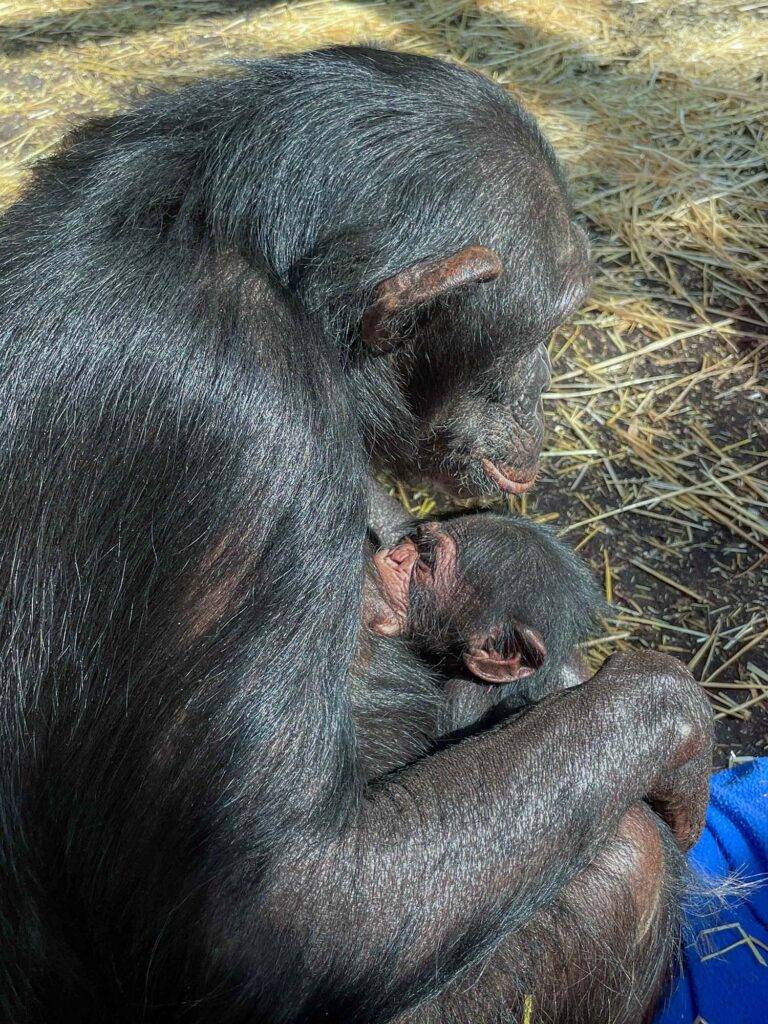
Gigi, 12, was born at the Dallas Zoo in 2011 and arrived at the North Carolina Zoo in 2012. The animal care and veterinary teams report mother and baby are healthy, and the infant is nursing actively.
Chimpanzees are highly protective of their young, with mothers holding infants exclusively to their chest until approximately four months of age. Zookeeper Kristy Russell said Gigi has been an attentive mother and has benefited from role models in her troop, including her own mother.
This is the sixth chimpanzee birth at the Zoo since 2010, making it the most successful Association of Zoos and Aquariums facility for breeding the species.
A giraffe calf—already approximately six feet tall and weighing 145 pounds—was born Saturday to 13-year-old Leia and her mate Jack. The first-time mother and calf are bonding behind the scenes and are healthy, according to the Zoo’s giraffe care team.
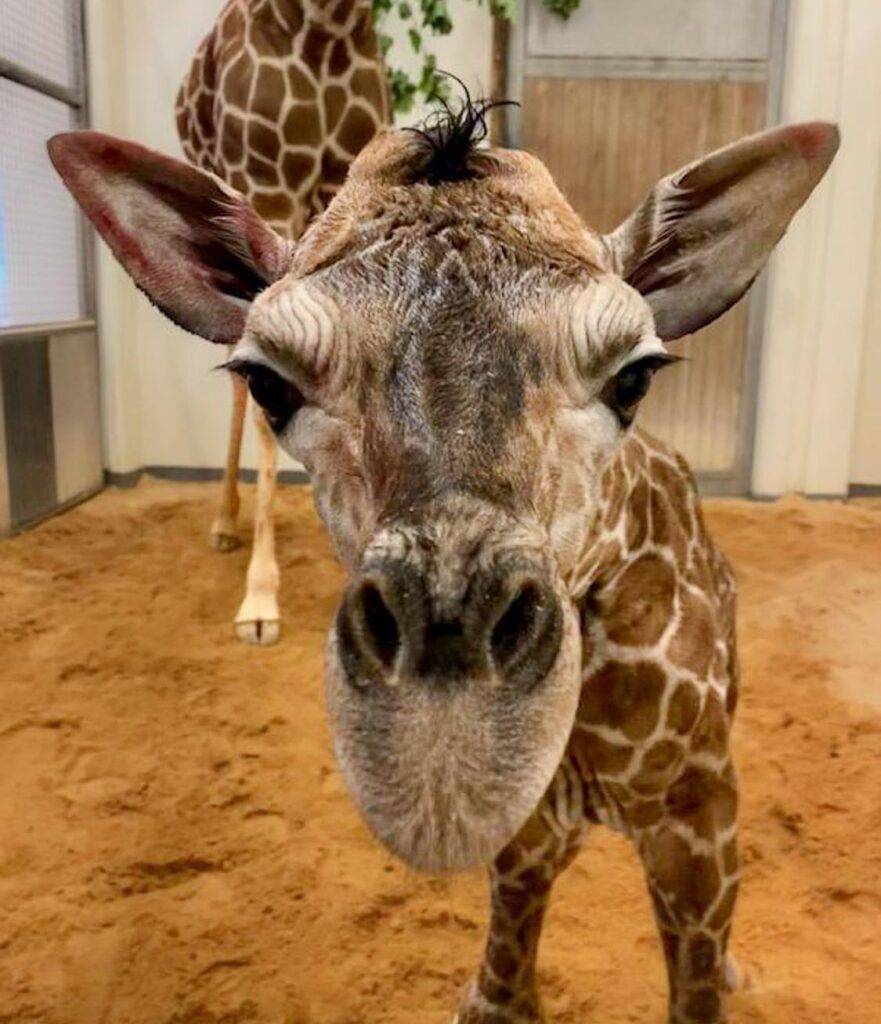
“Leia and her calf are doing amazingly well,” said Zookeepers Kristi Myers, Jason Balder, Mary Wilson and Kelly Davis in a joint statement. “Our team could not be prouder of how attentive Leia has been with her firstborn.”
The other giraffes in the herd—Jack, Turbo and Amelia—are curious about the newborn and have been “bopping noses whenever they can,” the keepers said.
Giraffe calves are typically five to six feet tall and 150 to 200 pounds at birth. Giraffes have a gestation period of 14 to 15 months. Leia was born in 2009 at Zoo Miami and arrived at the North Carolina Zoo in 2014. Jack was born in 2008 at Dickerson Park Zoo.
Zoo Director and CEO Pat Simmons said the birth reinforces the Zoo’s conservation mission.
“The giraffes at the North Carolina Zoo serve as ambassadors for their wild cousins, giving our guests the opportunity to learn about these majestic creatures and the conservation challenges they face,” Simmons said.
Three sand cat kittens were born May 11 to first-time mother Sahara, 3, and father Cosmo, 9. The kittens’ sexes have not yet been determined.
Small enough to fit in the palm of a hand, the kittens are beginning to explore their desert habitat. Though they appear adorable with large ears and eyes, Zoo staff said they are wild, ferocious hunters that should never be kept as pets.
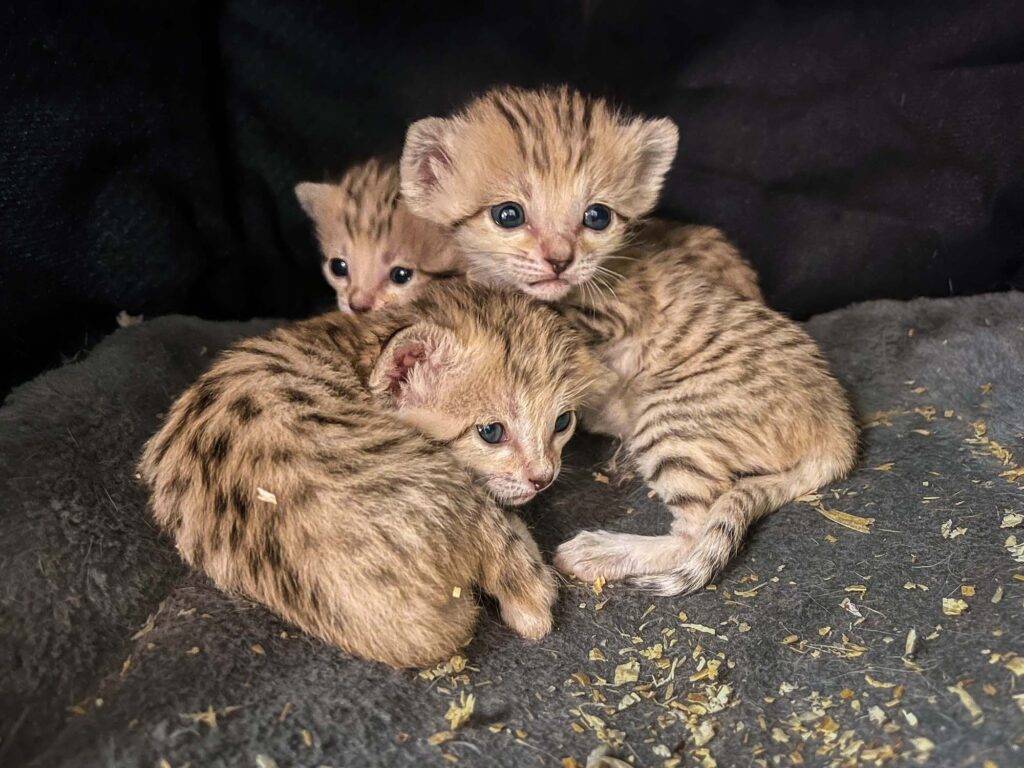
Sand cats are the only feline species to live exclusively in desert environments and hunt venomous snakes. They are native to the deserts of North Africa, the Arabian Peninsula and Asia and are nocturnal, quickly adapting to extreme desert temperatures.
More than 50 sand cats live at over 20 AZA institutions. Cosmo and Sahara were paired as part of the Sand Cat Species Survival Plan to maintain genetic diversity and increase populations in human care.
The Zoo plans to conduct a public naming poll for the kittens, with details to be announced on its social media channels and website.
(All photos courtesy North Carolina Zoo)
###