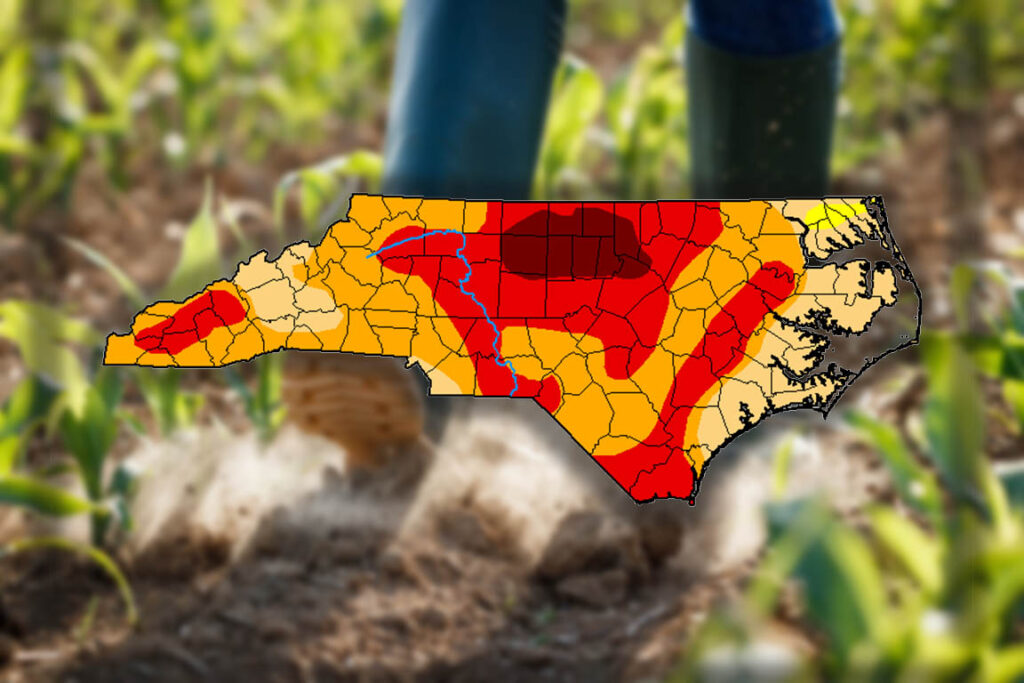
ASHEBORO, N.C. (ACME NEWS) — Heavy rains over the final two weeks of June brought little relief to the Piedmont, leaving the region locked in extreme to exceptional drought conditions.
According to the N.C. Drought Management Advisory Council’s latest assessment, extreme and severe drought now covers nearly 75% of the state. An area of exceptional drought, stretching from the northern Piedmont west to the triangle, accounts for 6.62%.
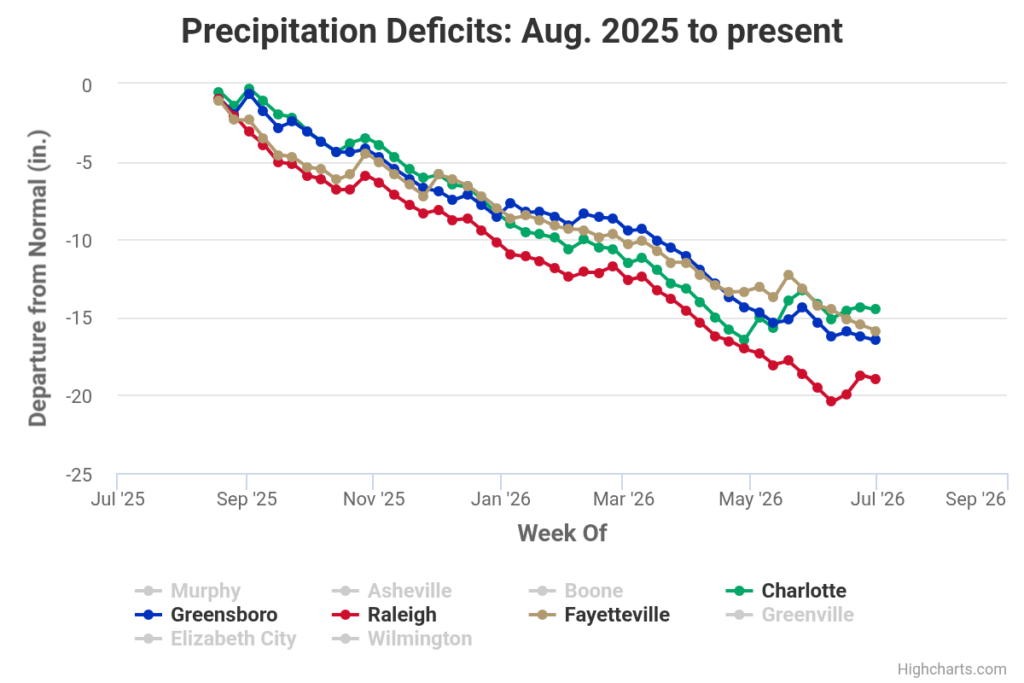
At the Greensboro airport weather station, 1.91 inches of rain fell over the past two weeks but June ended with less than half the normal rainfall. The NC Climate Office at NC State puts Greensboro’s rainfall deficit at almost 16.5”, with Raleigh reaching an almost 19” rainfall deficit since Aug 2025.
“In the northern Piedmont, high evaporation rates in the heat have quickly sapped new moisture, and lake levels haven’t bounced back,” the council reported. The mechanism is straightforward: whatever rain falls in the Piedmont evaporates almost immediately under temperatures consistently in the 90s, leaving little relief for groundwater or surface water supplies.
Groundwater levels across North Carolina have reached critically low levels. Most of the state’s Drought Indicator Wells are below their 20th percentile historical average, with several stations registering all-time lows.
The months-long drought since August has created significant stress for livestock producers like Jim Moss, who depend of creeks and ponds for livestock. “A lot of creeks are drying up and ponds are way low. We are using municipal water for the first time to supplement,” Moss told the NC State Extension.
“We are coordinating with utilities and reservoir operators who are actively working to maintain supplies amid widespread drought conditions,” said Klaus Albertin, chair of the North Carolina Drought Management Advisory Council and water resources engineer with the NC Department of Environmental Quality’s Division of Water Resources.
Forecasters with the Climate Prediction Center point to a 40-50% that above-normal temperatures are expected to persist, continuing to accelerate moisture loss across the region.
###